• About Caro Ness

Caro Field Author

~ Thoughts and musings and poetry

Caro Field Author

Category Archives: non-fiction

A Blessing

09 Wednesday Jan 2013

Posted by Caro Field in non-fiction, Prose

≈ 6 Comments

I have been speculating on what I consider a blessing to be in 2013…and why!

A blessing. It is defined in the dictionary as the infusion of something with holiness. A blessing allows for my spiritual redemption. It is the will of God. It is my hope for approval from others.

The modern English language term bless is probably derived from the term blessen, first heard in 1225, which in turn derived from the Old English, blǣdsian, which appeared first in the Northumbrian dialect around 950 AD. The term also appears in other words, such as blēdsian from some time before 830, blētsian from possibly around 725 and blesian from the year 1000, or near enough. All mean to make sacred or holy by some kind of sacrificial rituals. This was in the Anglo-saxon era. The word found its origin in German pagan customs, and means to mark with blood. This is where the term blōd, meaning ‘to blood’ comes from.

So to bless someone is, literally, to express the wish that they find God’s favour. More prosaically, if I bless someone, I am wishing them well. In this fast food day and age, we seem to have lost the connections we used to have. We have neglected the art of socialising. We have forgotten what it means to REALLY communicate.

Instead, we conduct our lives via text messages. We structure our lives around email. We speak and write in a truncated way, in acronyms. When is the only time we are likely to get anything handwritten? A note on a birthday present. Or a card at Christmas.

So when an old friend sent me a letter, it truly felt like a blessing. This woman had with forethought and intention, sat down to write about her life at that moment, her hopes and dreams. She also wanted to know how I was, what I was up to, what my plans for the coming year were. And she had chosen to send this missive to me. Mindfulness had inspired her to write it…in gratitude it was joyfully received. Not least because it is such a rare and precious gift, in this day and age. So when next you receive a handwritten note, whether it is a scribble or a tome, consider this…it is the 2013 equivalent of a blessing…..it was destined for you, to benefit you alone… do not just crumple it up and throw it away.

SING

06 Sunday Jan 2013

Posted by Caro Field in non-fiction, Prose

≈ 9 Comments

Image

I love to sing! Don’t you? It lifts my spirits, fills my heart, nourishes my soul. Whether it is singing in a choir or singing alone in the shower, it cannot fail to energise, enthuse and yes, surprise.

There is that soaring sense of achievement when you hit that top ‘A’. A sense of shared accomplishment when a harmony is perfect. A triumph gained from distinguishing the individual notes of a broken chord or arpeggio. The magic of turning mere speech into lyrics by the imposition of rhythm, of tonality. Accompanied or a capella, a song is a sheer expression of creativity and joy.

Recently, with hip hop music, we have seen the evolution of the voice being used as a kind of vocal percussion, aka beatboxing. In Turkish and many African and middle-Eastern countries, singers employ elaborate untexted vocal improvisation within their musical tradition. Such music existed long before the First Crusade to Palestine, possibly even as early as the year 900. In Iceland they practice throat singing. In the sprechstimme technique, singers half-talk, half-sing a piece of music and often only approximate pitch. In European classical vocal music, traditional Indian music and scat singing in jazz arrangements, a solfege assigns syllables to each note. The most famous such music is the Do-Re-Mi song in the ever popular musical, The Sound of Music.

However, the most enduring, popular form of vocal music is the song. A melody with lyrics. And it is that melody that lifts the words from prose to become musical poetry. Your song may be a Geman lieder, an Italian canzoni, a French chanson, an English or American folk song. Linking them all is the fact that meaningful words are made more resonant, more powerful, by putting them to music. That music can inspire, stir, tug at the heart strings, but always it is the combination of the two which makes the song work. A lyric may be immensely powerful, but for the western ear as a rule, setting it to a minor falling cadence of notes for example, tends to heighten the emotional impact.

Whatever you feel about songs, I urge you to sing as often as possible in 2013. Singing has immense physical and emotional benefits. It exercises the body aerobically, increasing blood oxygenation and exercising the major muscle groups in the upper body. It is immensely influential for psychological problems, reducing stress through the action of the endocrine system and giving us a sense of emotional well-being. Singing as part of a choir can also give us a greater sense of community, of belonging.

Singing can help you to live longer. It keeps you in shape because it is good for the heart and lungs. It releases endorphins into the body, giving you the feel good factor, but unlike chocolate, you don’t gain weight! It strengthens the heart, increases lung capacity, improves posture, clears synuses, raises levels of immune system proteins, tones the muscles of the stomach and back and heightens mental acuity.

So what’s not to like? Go on! Turn over a new leaf! Make 2013 the year that you start to SING!

The Artichoke

04 Friday Jan 2013

Posted by Caro Field in non-fiction, Prose

≈ 6 Comments

Did you know that, amongst other things, that this is the month of the artichoke? I didn’t till the other day when I discovered it on my Ultimate Blog Challenge mail! I did know however, being a foodie, that there are 2 types of artichoke, the globe and the Jerusalem.

Image

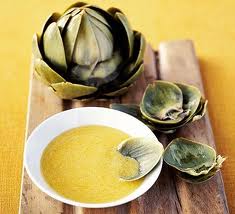
The globe artichoke  (Cynara cardunculus var. scolymus) is a perennial plant. It is a thistle of the genus Cynara  which originates around the Mediterranean. It grows to somewhere around 1.4 – 2 m (4.6 – 6.6 ft) tall, with graceful, arching, deeply lobed, silvery, greyish-green leaves. The flowers develop as a large head from an edible bud with a number of triangular scales; these individual florets are purple. The edible portions of the buds consist  of ‘the heart’, which is mainly the fleshy lower portions of each bract and the base; the numerous florets in the centre of the bud is called ‘the choke’ or ‘beard’. These are inedible in older, larger flowers, but utterly delicious, with melted butter, in immature ones.

In North Africa, they still grow in the wild, but cultivated seeds of globe artichoke were discovered in Roman ruin excavations in Egypt. The name comes from the Arabic, ardishoki, meaning ‘ground thorny’ but in Sicily, where they have been cultivated since the Ancient Greeks, they are known by the Greek word kaktos. The Romans knew them as carduus, which is almost certainly where the name for the naturally occurring variant of the same species, the cardoon, comes from (Cynara carduculus).

Image

Most of us like to eat a globe artichoke with either melted butter or hollandaise sauce but did you know you can drink it too? It is the principal flavour of a drink known as  Cynar. It is either drunk neat, on the rocks, or as a Cin Cyn cocktail, a version of the Negroni, that substitutes Cynar for Campari. You also might like to know that the globe artichoke has medicinal properties.It is highly antioxidant,  and a good digestive aid, because it increases bile flow and aids liver function through the production of cynarin. It also decreases the risk of coronary heart disease and arteriosclerosis, by lowering blood cholesterol.

Image

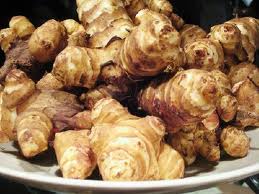
The Jerusalem artichoke (Helianthus tuberosus) is a species of sunflower, native to North America. It has many names; sunroot, sunchoke, earth apple,  topinambour, or (for reasons that soon become clear) as fartichoke. It grows from Canada in the north, as far west as North Dakota, and as far south as Florida and Texas. It is a pretty plant but is grown  more particularly for its tuber, which is one of the most delicious vegetables, even though it has somewhat less elegant side-effects.

It is a herbaceous perennial plant of between 1.5 – 3m (4 ft 10 in – 9 ft 10 in). It has rough, hairy leaves that grow opposite one another on the stem. These are large and oval at the base and become progressively smaller and narrower, the nearer the flower head they get. The flower is a sunburst of yellow, with between 10-20 petals. The tubers are elongated and bumpy, look a little like root ginger, and are about 7.5 – 10 cm long (3 – 3.9 ins). They can be brown, white, red or purple in colour.

Image

These artichokes contain about 10% protein, have almost no starch, no oil whatsoever and are rich in inulin, which when broken down becomes fructose. That  is what accounts for their sweet flavour and why Jerusalem artichokes are a good food choice for diabetics, because fructose is more easily tolerated.

It is a bit of a mystery as to how the Jerusalem artichoke got its name, since it has no connection to the place and it is not actually an artichoke.  When Italians settled in America, they called the plant girasole, the Italian word for sunflower, and over time this got bastardized to Jerusalem. Or maybe the founding fathers thought of the new world as their new Jerusalem and named their vegetable for it.

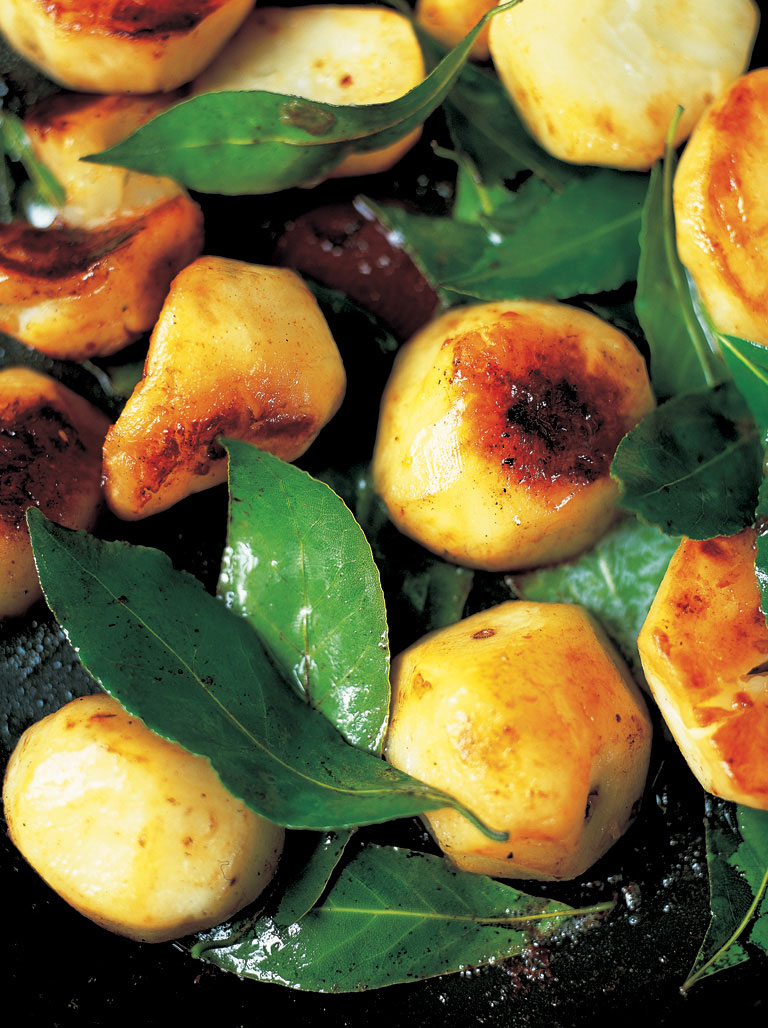
It was first cultivated in North America by the Native American tribes and was bought back to Europe as early as 1605. In 2002 it was cited as the best soup-making vegetable in the Nice Festival for the Heritage of French Cuisine. So why don’t you start eating it in 2013? I like mine best, sliced finely, sauteed in butter, with a sprinkling of garlic, bay leaves and a squeeze of lemon juice (go check Jamie Oliver’s recipe). Fancy cooking me some?

Image

Orange

02 Wednesday Jan 2013

Posted by Caro Field in non-fiction, Prose

≈ 15 Comments

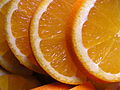
Orange. I painted one wall in my kitchen orange in my last home. I started out just painting all the walls white, but the room was lacking something. Lacking COLOUR. So the wall, above the Aga became my blank page and I chose to scribble on it in orange. Bright orange. Ding dong orange. And the wall that abutted this orange wall was then painted azure blue. Orange’s complementary colour. It worked. Everyone always commented on how fabulous it was… So it wasn’t just me who thought so!

This is where I should post a picture of it, but I am not going to because I want you to just imagine it. A wall just long enough to accommodate an Aga, painted like a tropical sun splash. And a curved wall adjoining it painted the colour of the sky on a bright summer’s day. It lifts your spirits, doesn’t it? Here are the colours, now let your imagination paint the picture.

images

335A9A

Orange. Not a colour that particularly appealed to me as a child. Why, I wonder, does it do so now? What has changed?  Is it because, as a jaded, more cynical adult, I need more colour in my life to keep me cheerful? Well yes, because it undoubtedly has that effect. But no, because it is such a brilliant colour intrinsically, such an explosion of joy!

Orange, according to colour therapy, is a power color. It is healing. It is meant to increase our craving for food,  stimulate enthusiasm and creativity and give us stamina. Anyone who is an ’orange’ person, is usually thoughtful, sincere, mindful. Some superstitious folk go so far as to burn an orange candle for 7 nights in succession, in order that their luck will  change.

Unlike the explosive grenade that is red, orange is a sunburst. It is more thoughtful, thought-provoking, balanced, controlled. Curiosity makes orange-lovers tick. They have a thirst to explore, to discover, to create. Orange spices up your life, relieves boredom and brings levity to anything that is proving just a trifle too serious.

120px-Orpiment-d06-185b

Orange gemstones are said to increase your sense of personal power and are very effective for people with low self-esteem. In Europe and America it is associated with extroverts, amusement, fire, autumn, warning even, but in Asia with spirituality. Orange fruit gave its name to the colour. It was originally known as pomme d’orenge in Old French and that name in turn was derived from the arabic narenj, the Persian naranj, the Sanskrit word, naranga. The word orange only appeared in English in 1513, prior to that, it was known as yellow-red or geoluread. In the Netherlands, Germany and Russia, the fruit  is still called the Chinese apple.

Image

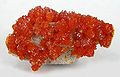
Orange has a rich history. Ochre pigments were added to animal fats and painted on the walls of caves in Lascaux, France. An orange mineral pigment, orpiment, was traded by the Romans and used by the Chinese as medicine, even though it is highly toxic. It was also used by alchemists to try to make gold. Another mineral,  realgar, was used by the Egyptians to colour their tomb paintings and by medieval artists to illuminate manuscripts. The house of Orange-Nassau was one of the most influential royal lineages in Europe in the 16th and 17th centuries. The flag of the city of New York has an orange stripe for the Dutchmen who founded the colony. The protestants in Ireland were known as Orangemen because William III of Orange, a protestant himself, defended them against the Roman Catholic majority. When Dutch settlers in South Africa rebelled against the British in the 19th century, they founded what became known as the Orange Free State.

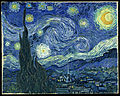
The colour found particular favour with painters too. The pre-Raphaelites, Impressionists and Post-Impressionists all championed the use of the colour, but none so effectively as Vincent Van Gogh, who wrote to his brother, Theo, about “searching for oppositions of blue with orange”, because any artist worth his salt knew the juxtaposition of the two made each colour brighter.

Image

You might also like to know that the saffron stripe on the orange, green and white Indian flag symbolises, courage and sacrifice. And that these three colours also feature  on the flags of  the Republic of Ireland, the Ivory Coast and Niger. That the US Department of Homeland Security’s  code orange represents the second highest terrorist threat. That the Orange river rises in Lesotho in the Drakensberg Mountains and flows westward through South Africa to the Atlantic Ocean. It is the longest river in  South Africa and forms the border between that country and both Namibia and Lesotho. In 1867 the first alluvial diamond, the Eureka, was found at Hopetown on this river, followed 2 years later by the much larger Star of South Africa, starting a diamond rush.

Image

So next time you consider the colour orange, dear reader, consider too its extraordinary journey through history, its evolution, and the simple fact that it brightens even the gloomiest of situations…

Happy New Hangover Cure

01 Tuesday Jan 2013

Posted by Caro Field in non-fiction, Prose

≈ Leave a comment

We’ve all been there, haven’t we? A head that feels as if thousands of meerkats are shifting from foot to foot in stilettos on your forehead. Temples that are being used as bongo drums in the percussion section of a large orchestra. A mouth that feels as if something small and hairy died in it overnight… and a thirst. A thirst so bad that it is as if you have spent the last 10 days in the desert. Well, here we go! Hangover cures for the day after! The most popular is probably a Bloody Mary, but I have given you its non-alcoholic little sister. Here are some other heavenly solutions!

Absinthe Makes The Heart Grow Stronger

Absinthe  is a highly alcoholic beverage of 45-74% proof. It is made from botanicals; the flowers and leaves of the grand wormwood (Artemisia absinthium), green anise and sweet fennel to name a few. It was viewed historically as a pretty good tonic for the stomach. It originated in Neuchatel, Switzerland in the 18th century and became very popular with Parisian writers and artists in the late 19th and early 20th centuries.

15182117-bottle-and-glasses-of-absinthe-with-lime-and-ice-isolated-on-white

  • 2 oz absinthe
  • 1 oz anisette syrup
  • 1 egg white
  • soda

Shake the ingredients violently with cracked ice. Strain into old fashioned glass. Splash in a little soda water to your taste/need!

The Morning After

images-6You may not know it but raspberries come from the genus, Rubus, which is part of the Rose family. Well, this cocktail will certainly give you a rosy glow after the night before! This may be due to the fact that raspberries are a rich source of Vitamin C and are high in dietary fibre.

  • 7 raspberries + raspberries to garnish
  • 1.5 oz vodka
  • 1 oz Monin Gingerbread Syrup
  • third oz lime juice
  • third oz lemon juice
  • 2 dashes Tabasco

Muddle raspberries in base of shaker. Add all other ingredients with ice. Shake hard and strain into cocktail glass.Drop a couple of raspberries in the bottom of the glass. Zest orange peel over drink to garnish.

Tequila Immune Booster

Created by mixologist, Ross Meisel, at Cocktail Bodega. Bar owner, Matt Levine, claims this is the surest way to manage the most fearsome of hangovers. Tequila is distilled from the blue agave plant, primarily in the area surrounding the city of Tequila, 65 kilometres (40 miles) northwest of Guadalajara, and in the highlands of the western state of Jalisco, in Mexico.

images-4

  • 2 oz tequila
  • 2 oz fresh carrot juice
  • 3 oz fresh squeezed orange juice
  • 2 pieces root ginger
  • 1 tbsp vitamin C

Muddle ginger. add other ingredients. Shake with ice and strain into a glass.


The Eye Opener

images-5Created by Mixologist, Chess Lankford at Alobar. Espresso is made by forcing extremely  hot water under high pressure through very finely ground, compacted coffee. If the coffee is tamped down, it encourages the water’s even penetration of the grounds. This process produces a beverage that is syrupy, by extracting both solid and dissolved components.

  • 2 oz coffee infused bourbon
  • 1 oz Frangelico – hazlenut liqueur
  • 1 oz espresso

Make coffee bourbon by infusing half a cup of ground coffee in 750 ml bottle bourbon for at least 24 hours. Strain coffee grounds through cheesecloth/filter. Store for reuse. Combine all ingredients,shake well, serve over ice.


Virgin Mary

Anita-Clare’s own recipe,because, as most of us know, she has been perfecting this cocktail and it’s rather more adult alcoholic version, for some years now. Fernand Petiot claimed to have invented the drink in 1921 while working at the New York Bar in Paris, later Harry’s New York Bar, a frequent hangout for American expatriates. But two other claims are plausible. The first is that it was invented in the 1930s at New York’s 21 Club by a bartender named Henry Zbikiewicz, who was charged with mixing Bloody Marys. A second claim attributes its invention to the comedian George Jessel, who was a frequent visitor to the same club.

Serves 4

recipes

  • 1 litre of premium tomato juice
  • 1 tsp celery salt
  • Juice of one lime
  • 1 tbs of Worcestershire sauce
  • 1 tbs of Tabasco
  • 1 tsp freshly milled black pepper
  • 1 tsp of freshly grated horseradish
  • 4 celery sticks
  • 4 long cucumber spears

Place all of the condiments and aromatics in the bottom of a heavy based jug and pour over the tomato juice. Stir until all the flavours have combined and pour over long glasses filled with ice. Place celery stick and cucumber spear in each glass and serve. If you fancy something a bit stronger then the addition of vodka will turn this delicious concoction into a fantastic Bloody Mary.

Hair of the Dog

67hair_of_the_dogThe old saying “hair of the dog that bit you” is a common means of curing a hangover. Most people choose a bloody or virgin Mary but the thick, red drink can be stomach churning to look at, let alone quaff when you have a hellacious hangover. The Hair of the Dog cocktail is a tremendous alternative: a little bit of alcohol, sour citrus and a hot digestive to calm the stomach. Unless you have Bloody Mary ingredients on hand, Hair of the Dog is easier to mix.

  • 6 oz gin
  • 1/2 oz fresh lemon juice
  • 2-3 dashes Tabasco sauce

slice of chili pepper Pour the gin and Tabasco into an ice-filled cocktail shaker. Shake generously. Strain into a chilled glass. Garnish with a chili pepper. [Remember to wash your hands well with soap (especially before touching your eyes) if you handle the chili pepper.]

If all else fails, climb into bed with someone you love and…..well, you fill in the rest!

…and if that doesn’t float your boat for any reason (I can’t think why!) then tuck into a bowl of mashed potato….

Festive Fizz

31 Monday Dec 2012

Posted by Caro Field in non-fiction, Prose

≈ Leave a comment

I enjoyed my journey through the cocktail drinking world so much that I suggested to Anita-Clare that I write about some good ones to celebrate the New Year. She asked me if I might consider writing her a post on champagne cocktails to ring in 2013 in style…so here are just a few!

Slightly controversially, I have not included Bucks Fizz, or Mimosa, as it is known in France. But I believe that most of us will know that it is a combo of orange juice and fizz, in proportions to suit your palate so I am assuming you can make it with your eyes shut!

Ambrosia

Image

In Roman Mythology, Ambrosia was, of course, nourishment of the Gods. It is often considered to be almost synonymous with nectar, but ambrosia was the food and nectar the drink. Ambrosia was believed to be brought to Olympus by doves and bestows the gift of immortality.

1 shot Applejack/Calvados/Apple Brandy

1 shot Cognac

quarter shot Triple Sec

quarter shot lemon juice

Champagne

Mix together Applejack,Triple Sec, Cognac, lemon juice.

Shake well with ice and strain into champagne flute.

Top up with champagne.

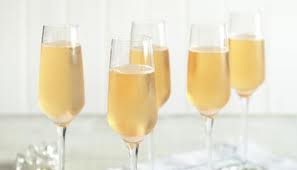
Bellini/Bombay Bellini

Image

I know this drink featured in my last booze post, but it cannot be excluded from any list of champagne cocktail recipes because it is simply one of the most scrumptious and easiest to make for your friends!

1 peach or for Bombay Bellini,  a splah of mango nectar

Champagne

Blend peach to puree and put into a champagne flute

Top up with champagne

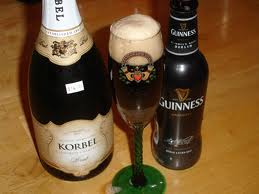
Black Velvet

Image

Created by the bartender at the Brooks club in London in 1861to mourn the death of Prince Albert, Queen  Victoria’s consort. The drink, rich brown in colour, with a creamy head, was supposed to mimic the ermine and black/purple armbands worn by mourners.

1/2 flute champagne

1/2 flute Guinness/stout

Put Guinness into flute

Top up with champagne

Classic Champagne Cocktail

Image

This recipe was made by Andy Parsons on the BBC TV programme, Something for the Weekend. Movie trivia reveals that Victor Lazlo ordered this cocktail in the 1942 movie, Casablanca.

1 sugar cube

dash of bitters

20ml/three quarters fl oz cognac

enough champagne to fill the glass

Place sugar cube on spoon. Drizzle bitters over it.

Drop into bottom of champagne flute. Add cognac.

Top up with champagne and serve.

Flirtini

Image

A favoured cocktail for ladies on Valentine’s Day or New Year’s Eve. Make sure you serve this drink immediately, so the fizz does not lose it’s bubbles!

2 pieces fresh pineapple

1/2 oz Cointreau

1/2 oz vodka

1 oz pineapple juice

3 oz champagne

Muddle pineapple pieces and Cointreau in bottom of mixing glass.

Add vodka and pineapple juice and stir well.

Top up with champagne.

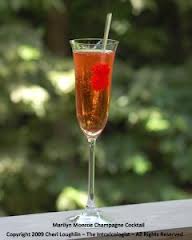
Marilyn Monroe

Image

Norma Jean Baker, or Marilyn Monroe, as she is more commonly known, is famous for her absolute passion for champagne, so much so, that she once bathed in it! And it is the drink that you will see her quaffing most frequently in her films…so it is no surprise that a champagne cocktail is named for her.

1 shot apple brandy/applejack

dash grenadine

Champagne

Put the apple brandy and grenadine in the bottom of your glass. (If you cannot find apple brandy/applejack, mix a little apple juice with brandy.)

Add the champagne and enjoy!

Who Am I?

30 Sunday Dec 2012

Posted by Caro Field in non-fiction, Prose

≈ 3 Comments

I watched a repeat of a programme  on 27th December on Channel 4 regarding a paratrooper called Ian Hamilton, who changed sex and became a woman called Jan. Filmed by Jane Preston for Cutting Edge, it is a searingly honest and compassionate portrait of a bright, articulate, humane person, that was originally aired in March 2008 under the title, Sex Change Soldier.

It got me thinking (dangerous I know) about what it is that makes people believe they know the real us. What do others think about me? Who am I? What are my core values? What makes me tick? Do other people really get me? Or not? Do they actually want to?

It seems to me that in this age of technology, with texting and mailing being the most common ways to communicate, so much gets left unsaid. Or worse still, we actively misunderstand. Because we do not have the tone of voice of a phone call, or the body language of a personal encounter to give us audible or visual clues, we may take serious offence where not only was none intended, the opposite was in fact true.

One of the saddest things to watch on Sex Change Soldier was the palpable pain of Jan when he realised that his family were turning their backs on him. They not only no longer had a son, they no longer had a child. I can understand confusion. I can understand sorrow. But to then couple that with rejection? No, that I cannot.

I have encountered this sea change in the way that people think about me, look at me, respond to or deal with me. Albeit on a much more minor level. I have multiple sclerosis. At the moment it has put me in a wheelchair. Why do people assume that I am the wheelchair? That I am the illness? Why do they think that I am defined by either in any way? That either of these has in any way changed who I am?

Yes, it’s true, the reality of both makes my life more difficult, travel tiring, sudden change more awkward. But that doesn’t mean I am any less prepared to rise to the challenge. I may get frustrated, I may get impatient with legs that don’t work as I’d like them to, but if anything it just makes me more bloody minded. And yes, I know that the people I am with will have to think ahead, make adjustments themselves, probably alter the way they do things slightly, but then the rewards are great for both of us. Although I say it myself, I have always been pretty good company. That hasn’t changed because my body does not work as well as it used to.

It is the same on a much larger scale for Jan. She is the same intrinsic person. She has not had a personality transplant. She has the same values, beliefs, intellect, capacity to love and be loved. It is merely the package that it is contained in that has altered. People will tell her that it is not her problem. That it is the fault of those who should love her and have chosen instead to neglect. And yes, it is their fault, their fear that has created this hideous stand-off. And I ask what are they so afraid of? Ridicule? Sly innuendo? It seems so. Jan certainly said that she was sad that her parents made it all about them, not her. That they  thought more about what their friends would think than the pain she had suffered for years. And of course, the courage to do what she eventually did, in the face of hostility from her family and many of her comrades in the amy.

But it IS her problem, because it has wounded her so deeply, it is mine because I am me, not MS. It is astonishing how many people get embarrassed when their children ask why I am in the chair. They are kids. They are curious. I usually reply that we both have push chairs because like theirs, my legs would get too  tired if I tried to walk around the shop. I can’t possibly count the times that people talk to the person who may be pushing my chair or walking alongside me rather than me, as if I’ve lost all mental faculties along with the use of my legs. I have not. If anything they are sharper, my instincts more sure.

Why? Because this illness has taught me a great deal about what matters in life and what does not. What is important and what is frivolous. What is essential and what is not. What real friendship is and why it is so precious. Which things are absolutely worth fighting for. What unconditional love really means.

In my own life, I force the envelope, but I am pragmatic. I know how to pace myself. I know when to push and when to stop. I will not let this illness defeat me, but I also have to acknowledge that it sets me certain rules that I must follow if I want to stay as healthy as I can be within its constraints. But, when is all said and done, chair or not, I am still, unashamedly, ME!

CHEERS (Part II)

26 Wednesday Dec 2012

Posted by Caro Field in non-fiction, Prose

≈ Leave a comment

So I am guessing that many of you may be somewhat the worse for wear after drinking and eating too much on Christmas Day! It is almost inevitable, I’m afraid!  Here is part two of my journey through some delicious cocktails. Hopefully, they  will raise your spirits, both literally and metaphorically…. You might even consider making them as hair of the dog recipes!

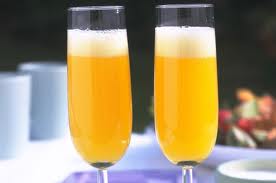
Bellini

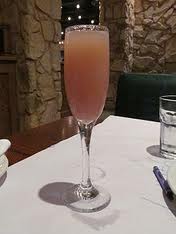
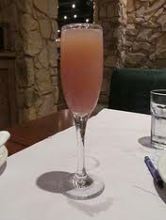
I am kicking off with one of the most delicious alcoholic accompaniments to breakfast in  bed, the truly scrumptious Bellini. The creation of Giuseppe Cipriani of Harry’s Bar in Venice in 1934. Because of the gentle pink colour of the drink, which reminded Cipriani of the attire of a saint in a painting by the Venetian artist, Bellini, Cipriani named his creation for the 15th century artist.
Image

2 ripe peaches, peeled, stoned, or the equivalent tinned in natural juice

chilled prosecco/champagne

Blend peaches to smooth puree. Refrigerate. Spoon half mixture into chilled champagne glass. Top up with Prosecco/champagne, stirring as you pour. Ideally, you should have one third peach to two thirds bubble. Unlike the other recipes, this should be enough to serve 2!

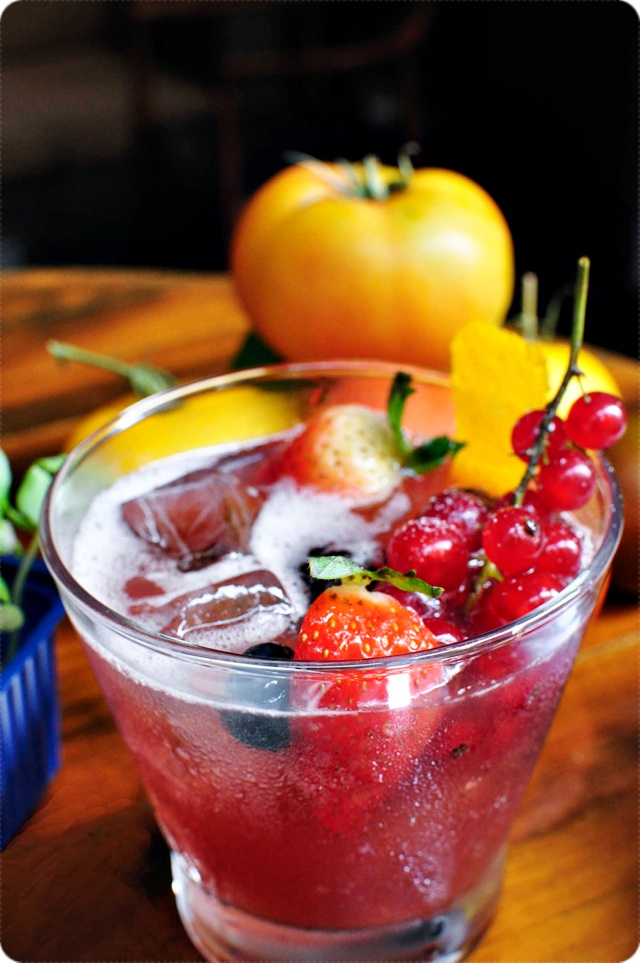
Berry Julep

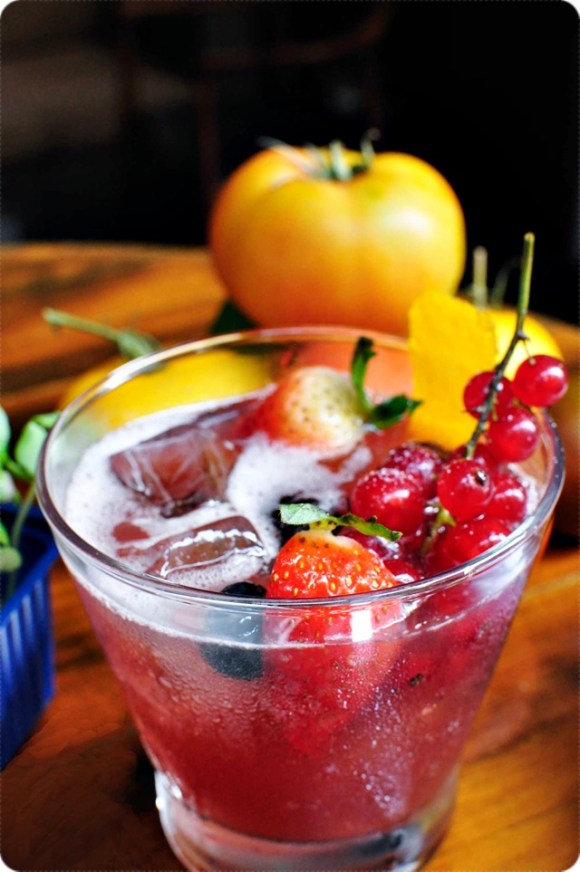
A berry version of the more common mint julep. The julep originated in the southern United States, possibly during the 18th century. The name is derived from the Persian word, ‘golab’ meaning rose water. The better-known mint julep has been marketed aggressively by Churchill Downs in connection with the Kentucky Derby since 1938. It is rumoured that 120,000 of them are consumed during the 2-day Derby/Oaks meeting.
Image

2 pts mixed berries – blueberries, strawberries, loganberries, raspberries

0.5 fl oz cognac

1 fl oz Cointreau/Triple Sec

0.5 cup of sugar

Stir together all ingredients in a bowl and allow to stand for 2 hours at least. Stir occasionally. Blend. Strain. Refrigerate. Garnish with berries/currants Consume!

Northern Spy

Created by Josey Packard, the female bartender at Alembic in San Francisco. Made from applejack (which is New Jersey’s local spirit), apple cider and apricot brandy, it is fruity and cheerful  and provides a guaranteed lift to the spirits! Applejack is America’s version of apple brandy, so you could use Calvados instead. Apple cider was originally North America’s major drink, in the absence of suitable drinking water because of poor sanitation. Jacking was the name given to freeze distillation. The cider was left out throughout the winter and the ice knocked off it regularly. The remaining liquid became far more concentrated and the alcohol content increased commensurately. From 10% to 30-40%. In New Jersey, applejack is commonly known as Jersey Lightning.
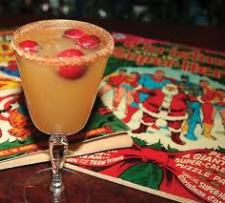
Image

Ingredients:

2 oz applejack

1 oz apple cider

0.5 oz fresh lemon juice

quarter to half oz of apricot brandy

cinnamon sugar

Rub a lemon wedge around the rim of a cocktail glass, dip in cinnamon sugar, shake to remove excess, and refrigerate.

Pour ingredients  into a cocktail shaker, add ice and shake well for 10 seconds.

You can make this drink more extravagant by topping your glass with an ounce of chilled dry champagne.

Whisky Sour

The first mention of this cocktail was in a newspaper in Wisconsin in 1870. It is probably the most famous of the ‘sour’ cocktails. The addition of an egg white turns this drink into a Boston Sour. Another variant is the Ward 8, which adds orange juice and grenadine. The use of different whiskies will radically change its taste. It is most commonly made with Bourbon.
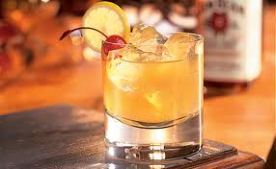
Image

Ingredients:

1.5 oz whisky

1.5 oz lemon juice

.75 sugar syrup

Pour all ingredients into a cocktail shaker with ice cubes. Shake well. Strain and serve.

Sidecar

The exact origins of this delicious beverage are unclear but it is thought to have been invented in Paris or London at the end of World War I and its name was derived from the motorcycle sidecar that transported the American army captain who drank it to the bar it was invented in. There are English and French schools. The English cite two parts brandy to one of the other two wet ingredients, the French cite equal parts of alcohol. This recipe hovers between the two!
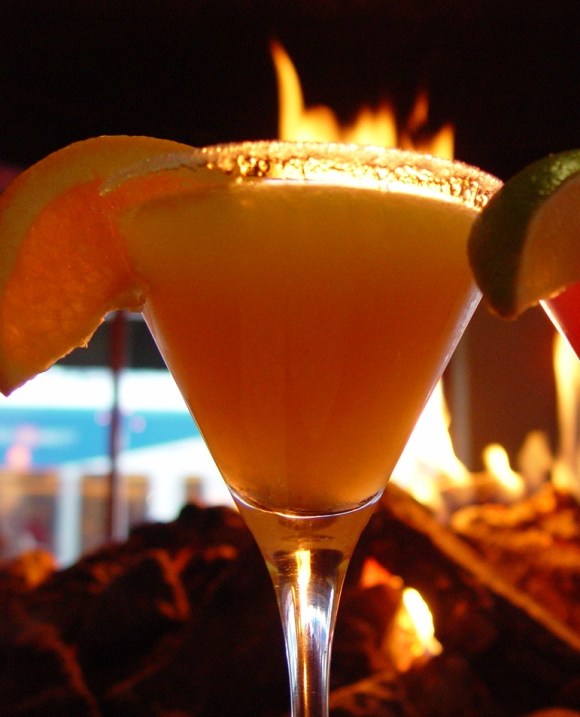
Image

Ingredients

1.5 oz Cognac/Armagnac/Bourbon

1 oz Cointreau/Triple Sec/Grand Marnier

0.5 oz lemon juice

sugar to taste

lemon twist to garnish

Rim a glass with sugar. Chill.

Add all ingredients to a cocktail shaker with ice cubes. Strain. Garnish. Enjoy!

Corn Oil

I had intended to highlight ten different cocktails over two days. I am adding this extra cocktail today in homage to the invention of women, and to my native Jamaica. It is rumoured that the drink is known as corn oil or corn an’ oil, because the women on all the Caribbean islands used to leave it in their kitchens by the stove, looking innocuous, much like overused cooking oil. However, it packs a fantastic punch! Falernum is a sweet syrup flavoured with ginger and/or cloves, lime, vanilla and sometimes allspice. It was named for the Roman wine, falernian.
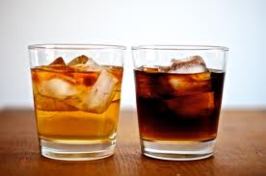
Image

Ingredients:

2 shots golden rum

0.5 shot Falernum

dash of Angostura Bitters (optional)

Stir all ingredients with ice, strain and serve in highball glass. Garnish with slice of lime.

….and now folks, go enjoy your cocktail-making! And have a terrific festive season and a fabulous, fun-filled, swizzle-sticked New Year!

Image

CHEERS! (Part I)

25 Tuesday Dec 2012

Posted by Caro Field in non-fiction, Prose

≈ Leave a comment

OK! So I admit it! I am a big kid when it comes to cocktails! I am well over the legal drinking age but the sight of the word “cocktail” or “happy hour” always sets my pulse racing a wee bit faster! I’m a cocktail junkie, I’m afraid! I love everything about them. The jewel-like colours. The shapes and names of the glasses. The shakers and the swizzle sticks (even the name has a frisson, is a minor aphrodisiac). The little paper umbrellas. But above all, the taste! I think I’ve yet to encounter one I didn’t like, though some are certainly more popular with me than others
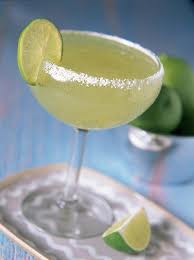
So when Anita-Clare suggested I write a piece for her wonderful blog, www.loverofcreatingflavours.co.uk,  on  cocktails, I leapt at the chance….I hope you love making them as much as I do

Cosmopolitan

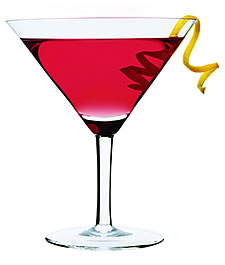
This is the choice of Anita-Clare’s mother, Joan Field. Widely accepted as being created in the 1970s. Some people claim that the original ‘Cosmo’ was created by Cheryl Cook in Florida, who wanted to create a drink that resembled a martini, and consisted of Absolut Citron vodka,  Triple Sec, lime juice and just enough cranberry juice to make the drink “oh, so pretty, in pink”!

Image

Ingredients:

1 and a half parts vodka

1 part cranberry juice

1 part Cointreau/Triple Sec

up to 1 part lime juice

Lime rind to garnish

Shake all the ingredients with cracked ice. Pour into a cocktail glass. Enjoy!

Daiquiri

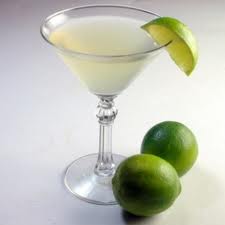
My favourite cocktail! This drink was invented by an American mining engineer, Jennings Cox, who was in Cuba at the time of the Spanish-American War, and named it after a local village and its mine. it was also one of Ernest Hemingway’s favoured tipples, though the version named for him adds grapefruit juice and maraschino. Usually made with white rum, which is the spirit direct from the still, I  prefer it made with brown or golden, which has been aged in casks. In my opinion this gives the drink a fuller, more mellow flavour.

Image

Ingredients:

3 parts rum

2 parts lime

1 part sugar syrup

Ice, cracked/crushed

Crack the ice. Pour the juice of 2 limes, the sugar syrup and the rum over the ice. Shake thoroughly and strain into a chilled glass.

Mojito

The Mojito is Anita-Clare’s choice. Originating in Cuba, it has historic origins, in that it claims to be based on another drink, ‘El Draque’ that was named for Sir Francis Drake. This is another drink made popular by Ernest Hemingway. In his own handwriting, there is a message written on the wall of a bar called La Bodeguita del Medio that reads: ‘My mojito in La Bodeguita, my daiquiri in El Floridita.’

Image

Ingredients:

2 parts rum – usually white

1 part lime juice

top up soda water

10 mint sprigs

1 part ice cube

1 lime slice

1 teaspoon sugar

Mash the mint and the sugar together to release the oils. Add the rum (dark or light) and lime juice and pour over the ice. Top up with soda water for a longer drink, in a highball glass.

Moscow Mule

Image

This drink was chosen by Anita for her sister, Emma-Kate. The drink is the product of the vodka frenzy that hit the States in the 1950s and it gets its name from the fact that it is a ‘mule’ – that is a cocktail made with ginger beer/ginger ale and the fact that vodka was seen as a predominantly Russian product. It was a particular favourite of the Hollywood set.

Ingredients:

2 parts vodka

2 parts lime juice

top up ginger beer

1 lime slice

4 ice crushed

1 orange juice

Put the ice cubes into a cocktail shaker. Add the vodka and lime juice and shake well. Pour into a hurricane glass, top up with ginger beer and stir gently. Decorate with the slices.

Margarita

Image

There is some debate as to who dunnit and where this delicious concoction was created. Some say Mexico, some say that it is a version of the earlier cocktail the Daisy, which was made with brandy rather than tequila. The third alternative appeals to me.  And that is that it was created in the Balinese room in Galveston, Texas by Santos Cruz for the singer Peggy Lee, using the Spanish version of her name.

Ingredients:

1 part tequila

1 part lime juice

1 part triple sec

salt

Frost the rim of a glass with salt. Shake all the ingredients together with cracked ice. Pour  into the glass.

Purple

22 Saturday Dec 2012

Posted by Caro Field in non-fiction, Prose

≈ 2 Comments

Purple. It is such a wonderful colour. I’ve always loved it. It is my favourite colour. In the colour spectrum, it Is in the range of hues between red and blue. Interestingly, according to colour theory, violet and indigo are not true purples but in most people’s minds they are, because they do come between red and blue in the colour spectrum, just in vastly different proportions.

As a child, I was mocked because I always adored the colour and my school uniform was purple. Since it was de rigeur to loathe anything remotely associated with education, I was a figure of fun and ceaseless ribbing. I was just as likely to be called Mulberry by one of my friends, as by my given name.

Purple has normally always been associated with royalty and nobility, possibly because in the distant past, only the very rich or elite could afford any clothing of Tyrian purple. This might have been, in part, due to the fact that the colour of the dye was produced from the mucus of a snail that was found on the shores of the city of Tyre, in ancient Phoenicia (currently known as Lebanon). Similarly, in China, Han purple, an artificial dye, was used by the emperors from 500 BC to 220 AD. It was used, for example, to decorate the Terracotta Army. The closest natural colour to Han purple is the colour of a crocus. The very first mention of the word purple in Europe was apparently in AD 975, so it can lay claim to having a good, long pedigree.

Violet is a spectral colour with a shorter wavelength than blue, whilst purple is not. There is no such thing as a wavelength of purple light and it does not appear on Newton’s colour wheel because it is a combination of red and blue or violet light. What is known as super-spectral. The difference between violet and purple is that violet becomes bluer in hue as light intensity increases, because of something that is (rather splendidly) known as the Bezold-Brucke shift. Purple, on the other hand, remains constant; no increase in blueness is evident.

On a chromaticity diagram, the line that connects the extreme spectral colours, red and violet, is known, somewhat romantically, as ‘the line of purple’ or more prosaically as ‘the purple boundary’. Interestingly, magenta is bang in the centre of this line, although most of us would associate magenta far more with red/pink than with purple, which we think of as much bluer. This is where whoever designed my school uniform was correct in every respect, because in the sixth form we wore a lavender shirt, a deep mulberry jumper and a magenta blazer….all different shades of purple.

Purple has all kinds of interesting connections. In France, academics who study Divinity dress in purple, as do most senior officials, such as Rector, Chancellor, Head of Faculty. Purple was the colour of the university I attended, Durham, and was known as Palatinate. Purple is associated with Saturday on the Thai calendar but in Japan, it is associated with death. In China, the literal translation would be ‘Purple Forbidden City’. The purple triangle was used by the Nazis to differentiate unorthodox religious groups, such as Jehovah’s Witnesses. In the military, a purple manoeuvre is one that involves more than one of the armed forces and in the USA, a Purple Heart is given to those wounded or killed in the line of duty. The purple hand is a gay and lesbian symbol against homophobic bullying. In Spain, purple represents the common people and red monarchism whilst for the rest of the world, it is the other way round. And most of us know that Prince wrote Purple Rain!

You might also like to know that, like orange and silver, no other word truly rhymes with the word purple. That in Star Trek, klingons have purple blood. That Byzantine religious texts were written in gold lettering on Tyrian purple parchment. And that Alexander the Great, the kings of Egypt and the Roman Emperors all wore Tyrian purple. So if you choose to wear this noble colour, you are in very exalted company!

…oh, and I hope you don’t consider this ‘purple prose’ ….!!

← Older posts
Newer posts →

A Four Letter Word – Buy Here

My Facebook Page

My Facebook Page

Enter your email address to follow this blog and receive notifications of new posts by email.

Join 1,534 other subscribers

Gallery

This slideshow requires JavaScript.

Blog Stats

  • 97,123 hits

Tags

artwork barcelona beach bear bend boat books brazil bridge butterfly canal caravan cars cats celebrity chef child chimes china Crowcombe desert dogs drinks eca embellishment equestrian fame flowers France friendship green guitar handbags happiness home Italy Japan joy lavender London love map music nature O P poetry puddings rain rainbow river rivers rosd salmon sand sea ships shoes shopping sky sleigh snow somerset spain stardom statue sunrise sunset The Road to Crowcombe trees walk walking weather winter world

Blog at WordPress.com.

  • Subscribe Subscribed
    • Caro Field Author
    • Join 409 other subscribers
    • Already have a WordPress.com account? Log in now.
    • Caro Field Author
    • Subscribe Subscribed
    • Sign up
    • Log in
    • Report this content
    • View site in Reader
    • Manage subscriptions
    • Collapse this bar
 

Loading Comments...