
 In 1886, the Statue of Liberty was being erected in New York Harbour. Eight hundred miles away, another potent symbol of Americana was about to be created by one John Pemberton, a pharmacist in Atlanta, who created a delicious, caramel-coloured liquid. When he felt the taste was just right, he carried it a few doors down to Jacobs’ Pharmacy. Here, the mixture was combined with carbonated water and given to customers who unanimously agreed that it was something special. So Jacobs’ Pharmacy put it on sale for five cents (about 3p) a glass.
Pemberton’s bookkeeper, Frank Robinson, named the mixture Coca-Cola, and wrote it out in his distinctive, cursive script. To this day, Coca-Cola is written exactly as Robinson did all those years ago. In the first year, Pemberton sold just nine glasses of Coca-Cola a day. A century later, The Coca-Cola Company has produced more than 10 billion gallons of the syrup that is at the drink’s core. Over the course of three years, between 1888-1891, Atlanta businessman Asa Griggs Candler secured rights to the business for a total of about $2,300 (about £1,500). Candler would become Coca-Cola’s first president.
Asa Candler transformed Coca Cola into a business. He gave away coupons for complimentary first tastes, he outfitted distributing pharmacists with clocks, urns, calendars and apothecary scales bearing the Coca-Cola brand, he ensured that people saw the Coca-Cola brand everywhere. By 1895, thanks to his marketing skills, Candler had built syrup plants in Chicago, Dallas and Los Angeles.
In 1894, a Mississippi businessman named Joseph Biedenharn became the first to put Coca-Cola in bottles. He sent 12 of them to Candler, but he wasn’t impressed. Despite being a brilliant and innovative businessman, Candler just didn’t recognise that the future of Coca-Cola would be with bottled beverages customers could take anywhere. He still didn’t realise it five years later, when, in 1899, two Chattanooga lawyers, Benjamin Thomas and Joseph Whitehead, secured exclusive rights from Candler to bottle and sell the beverage – for the sum of only one dollar.
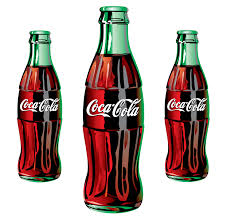 In order to ensure that Coca Cola should not be confused with other, inferior, copy-cat drinks, Coca Cola decided to protect the brand by designing a bottle that was syonymous with the drink. The Root Glass Company of Terre Haute, Indiana, won a contest to design a bottle that was instantly recognisable. In 1916, they began manufacturing the famous contour bottle, which remains the signature shape of Coca-Cola today. It was chosen for its attractive appearance, original design and the fact that, even in the dark, you could identify the genuine article.
In 1900, there were two bottlers of Coca-Cola; by 1920, there were about 1,000 and the company moved into Canada, Panama, Cuba, Puerto Rico, France, and other countries and US territories. The company’s presence worldwide was growing rapidly, and year after year, Coca-Cola conquered new territories: Cambodia, Montserrat, Paraguay, Macau, Turkey and more.
Advertising for Coca-Cola, always an important and exciting part of its business, really came into its own in the 1970s, and reflected a brand connected with fun, friends and good times. The international appeal of Coca-Cola was embodied in a 1971 commercial, where a group of young people from all over the world gathered on a hilltop in Italy to sing I’d Like To Buy The World A Coke. 2011 saw Coca-Cola reaching the grand age of 125. From the early beginnings when just nine drinks a day were served, Coca-Cola has grown to be the world’s most ubiquitous brand, with more than 1.6 billion servings sold each day.
 Caro Field Author
Fascinating Caro! XX
Thanks BEK!