
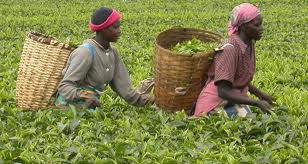
 Although not perhaps common knowledge in the West, there are number of other countries that produce tea. As the most recent of the tea producing countries, Africa has been able to capitalise on the experience of other tea-producing nations. As a result, Africa is now a major force in world tea, producing teas of high quality and good bright colour which are used for blending all over the world. Tea producing countries in Africa include Kenya, Malawi, Tanzania, Zimbabwe and South Africa producing about 32% of world exports amounting to some 424,000 tonnes.
Despite the fact that we perhaps think Kenya more famous for its coffee production, Kenya is one of the oldest of the African producers, having a history of tea dating back to 1903, when tea seeds from India were first planted on a two acre farm. Today, Kenya has 69000 hectares under cultivation by smallholders (shambas), under the protection of the Kenya Tea Development Authority, and tea producing companies in the public and private sector. Kenya exports over 349,000 tonnes of tea per year (22% of world exports). Kenya’s equatorial climate allows tea growing all year round.
The teas are very bright and colourful, with a reddish coppery tint, and a lovely, lively flavour. Kenya speciality tea is ideal as a drink for any time of day or night and are blended into many famous British brands.
Malawi was the pioneer of tea growing in Africa, with production first starting commercially in the 1880s in Mulanje. Now exporting over 43,000 tonnes annually, Malawi has a 3% share of world exports and is mainly responsible for the spread of tea cultivation in Africa. Malawi was the first African country to adopt the cloning method of estate refurbishment. Although Malawian teas are little-known as speciality teas, their superb colour and brightness means they are used in the blending of many leading British tea brands.
Tea production in Tanzania is thought to be the legacy of German colonisation under the reign of Kaiser Wilhelm II, but actually, its real development took place under British estate ownership between the two World Wars. Tanzania now exports over 22,000 tonnes of tea annually. All Tanzanian teas are bright in colour with a stimulating flavour that makes them ideal for use in blending. A black cut, torn and curled tea, the tea from KwaZulu is the only South African tea to be exported for international consumption. The flavour is strong and lively and is best drunk with milk.
Commercial tea production in Zimbabwe only began after the successful establishment of irrigated tea estates. With an average annual rainfall of not more than 26 inches per annum, as opposed to the 50 plus inches per annum usually required, irrigation is essential to encourage and sustain growth. Zimbabwe now exports over 15,000 tonnes of tea per year. Today, tea is a “controlled” commodity in Zimbabwe so that its quality and industry growth are protected.
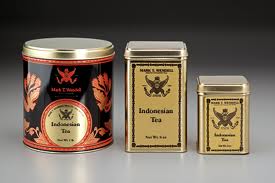 Tea has been part of the way of life in Indonesia for more than 200 years. Situated in the South China Sea and the Pacific Ocean, Indonesia forms an island chain stretching from Malaysia to Papua New Guinea. Java and Sumatra, two of the largest islands, are the main growing areas. After World War II, the Indonesian tea estates were in very poor condition, wrecked factories and tea bushes that had reverted to their wild state were just two of the problems which faced tea planters in the country. By 1984, after a lot of hard work and investment, tea exports from Indonesia began to make their mark on the tea market. Since that time, improvement in tea production and replanting of old estates has continued, with factories investing in new machinery. Now, Indonesia has 142,000 hectares under tea cultivation, with 65,000 of these being on Java. In 2005, Indonesia exported over 102,000 tonnes of tea, accounting for over 7% of world exports. Teas from Indonesia are light and full of flavour. Most are sold for blending purposes as this produces good financial rewards through foreign exchange for the country. In recent years, however, it has become possible to buy Indonesian tea as a speciality. It is extremely refreshing drunk black, garnished with lemon, and is easy on the waistline too.
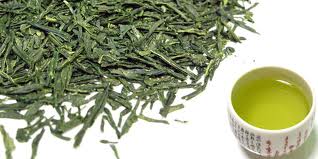 The Japanese have always been known to produce high quality green tea. The worldwide export of Japanese tea has dwindled over the past few decades, almost entirely due to the fact that land and labour costs in Japan are much more expensive than other tea growing regions in the world. Japan has 50,000 hectares planted with tea. The most commonly drunk tea in Japan is Sencha. It has dark green flat needles that produce a pale yellow tea with a light delicate flavour. Gyokuro, which means Precious Dew, is the very best of Japan’s teas and is the one chosen to serve to visitors and for special occasions. The leaves are beautiful, flat, pointed, emerald needles that give a smooth taste and a very subtle aroma, It is a hugely refined tea. Depending on the quality, the water temperature and length of infusion should be adjusted accordingly to give the tea that appeals to your palate.
 Caro Field Author
What an interesting and informative post! Loved reading this, might just go now and pot on a pot! X
*put
Indeed!
Thanks Bek! Put one on for me too!
How pleasant that there are so many tastes of tea, Caro, and so many different areas of the world where tea is grown! I’ve always been interested in the “red bush” teas of Africa that I’ve read about and have enjoyed a few of them, although I tend to always come back to my favorites–chamomile, licorice spice, Earl Grey, and a few others.
Redbush or rooibos can be an acquired taste…but I love it…I think my favourites are Keemun and Darjeeling…
This is fascinating. I’m dying to use my new tea-leaf cage (for lack of a better term). I am on the hunt for Buckingham Place tea! I love all your posts on tea and coffee!!
Thanks Carol! Glad you are enjoying them!
I went round tea plantations in Malaysia and India – what surprised me is how strong the smell of tea is when they are heaped in huge vats – much stronger than any cup of builder’s!
How wonderful! Lucky you!