
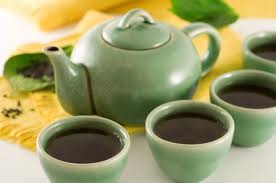
 Tea. An obsession for many worldwide. Pouring boiling water over the aromatic leaves of the tea plant, Camelia sinensis, has been a pastime willingly partaken by many for centuries as it is the most refreshing of beverages. As they say, little can’t be solved by sitting down to a nice cuppa tea!
Legend has it that the herbalist, Shen Nung was sitting under a tea tree whilst his servant was boiling some water for him to drink. Leaves from the tea accidentally blew into the brew and he decided to taste the resulting concoction and tea was born!
Whether or not there is even the modicum of truth to this story, it is likely that the origins of tea lie in China during the Shang Dynasty (1600-1046 BC), when it was consumed as a medicinal beverage. The Portugese priests and traders passing through China in the 16th Century then were introduced to it and brought it back to Europe, at which time it was called cha. The British became firm fans in the 17th century and they, in turn, introduced it to India in the hope that it would grow successfully there and break the Chinese monopoly on the product.
Tea plants are native to East and South Asia, and probably originated where the lands of northeast India, north Burma and southwest China meet. A number of techniques, including cluster analysis, chromosome numbers and hybridisation, suggests that there is likely a single place of origin for Camellia sinensis, an area including the northern part of Burma, Yunnan, and Sichuan province in China.
There is no exact proof as to where tea originated but a Chinese inventor was the first person to invent such a machine as a tea shredder and the first recorded drinking of tea is general Liu Kun during the Qin Dynasty. An old Chinese legend attributes the invention of tea to Shennong in 2737 BC. Tombs from the Han Dynasty, (206 BC – 220 AD) have been unearthed with tea containers in them.
It was a drink enjoyed by the masses during the Qin Dynasty (third century BC) and became increasingly popular during the Tang Dynasty (618-906 AD), when it’s use spread to Korea, Japan and Vietnam and it became the national drink of China. In the eighth century, a man called Lu Yu wrote the first book entirely about tea, the Cha Ching, or Tea Classic.
In India it has been drunk for medicinal purposes for a long but unkown length of time, but apart from the Himalayan region, it does not seem to have been used as a beverage until the British introduced it. Meanwhile, the Europeans were lagging behind in the discovery of tea! It was undoubtedly the Portugese traders and missionaries who originally brought it home but it was actually the Dutch who began commercial trading in tea. They established a trading post on the island of Java and it was from there, in 1806, that the first commercial shipment of tea was sent to Holland.
In 1750, tea experts travelled from China to the Azores, to plant tea, along with jasmines and mallows, to give the tea aroma and a distinctive quality. Both green and black tea continue to grow in the islands, which are the main suppliers to continental Portugal to this day. Catherine of Braganza, wife of Charles II, brought the obsession with tea-drinking to Great Britain around 1660, but tea was not widely consumed in Britain until the 18th century, and only by the aristocracy, and remained expensive until the latter part of the century. This was largely due to the punitive taxation of it, which was originally 25p in the pound! It was only as recently as 1964, that taxation on tea was finally abolished.
In Britain and Ireland, tea became an everyday drink for all levels of society by the late 19th century, but it was originally drunk as a luxury item only on special occasions, such as religious festivals, or wakes. And by the landed gentry, who were the only ones who could afford it. The price in Europe fell steadily during the 19th century, because Indian tea began to arrive in large quantities and flooded the market.
The first European to successfully transplant tea to the Himalayas, was Robert Fortune, who was sent by the East India Company on a mission to China in 1848 to bring the tea plant back to Great Britain. He began his journey in high secrecy as his mission occurred in the lull between the two Anglo-Chinese Opium Wars and westerners were not welcome at the time.
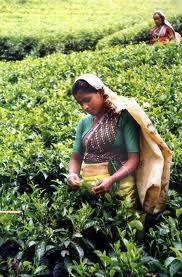 Tea was first introduced into India by the British, in an attempt to break the Chinese monopoly on tea. The British tried bringing in Chinese seeds to Northeast India but the plants failed, then they discovered that a variety of tea was indigenous to Assam and the Northeast region of India and used by local tribes. Using the Chinese planting and cultivating techniques, the British launched a tea industry by offering land in Assam to any European who agreed to cultivate tea for export.Tea was originally only consumed by anglicised Indians, it was not until the 1950s that tea grew more widely popular in India through a successful advertising campaign by the India Tea Board.
There are two different words for tea: “te” and “cha” The words that various nations use for “tea” reveal where those countries first acquired their tea and tea culture.
- Portuguese traders were the first Europeans to import the herb in large amounts. They borrowed their word for tea (chá) from Cantonese in the 1550s via their trading posts in the south of China, especially in Macau
- In Central Asia, the Mandarin word cha developed into the Persian word chay, and this then spread everywhere that Persian trade and cultural influence was strong.
- The Russians use the word cha because they encountered tea in Central Asia.
- The Burmese word for tea, laphet, pronounced does not fall into either of the two main groups. Laphet means wet tea, as opposed to dried tea, because they drink pickled or fermented tea
- The Dutch word for tea (thee) comes from the Min dialect. The Dutch may have borrowed their word for tea through trade directly from Fujian or from Fujianese or Malay traders in Java. From 1610 on, the Dutch played a dominant role in the early European tea trade, via the Dutch East India Company influencing other languages to use the Dutch word for tea. Other European languages whose words for tea derive from the Min dialect (via Dutch) include English, French (thé), Spanish (te), and German (Tee).
- The Dutch first introduced tea to England in 1644. By the 19th century, most British tea was purchased directly from merchants in Canton, whose population uses cha, though the English never replaced the Dutch-derived Min word for tea, char is often used as the slang word for tea…The word char for tea arose from its Cantonese Chinese pronunciation “cha” with its spelling affected by the fact that ar is a more common way of representing the word in British English.
- In North America, the word chai is used to refer almost exclusively to the Indian masala chai or spiced tea, in contrast to tea itself.
- However, in Moroccan colloquial Arabic, ash-shay means generic, or black Middle Eastern tea whereas at-tay refers particularly to Zhejiang or Fujian green tea with fresh mint leaves. The Moroccans are said to have acquired this taste for green tea,— quite unique in the Arab world — for East Chinese green tea after the ruler Mulay Hassan exchanged some European hostages captured by the Barbary pirates for a whole ship of Chinese tea!
- The colloquial Greek word for tea is tsáï, from Slavic chai. Its formal equivalent, used in earlier centuries, is téïon, from tê.
- The Polish word for a tea-kettle is czajnik, which could be derived directly from chai or from the Russian word for tea. However, tea in Polish is herbata, which, as well as Lithuanian arbata, was derived from the Latin herba thea, meaning tea herb.
- The normal word for tea in Finnish is tee, which is taken from Swedish. However, it is often colloquially referred to, especially in Eastern Finland and in Helsinki, as tsai, tsaiju, saiju or saikka, which is close to the Russian word chai. The latter word refers always to black tea, while green tea is always tee.
- In Ireland, in Dublin in particular, the term cha is sometimes used for tea, as is tay (from which the Gaelic word tae is derived. Char was a common slang term for tea throughout the British Empire and Commonwealth military forces in the 19th and 20th centuries, and its usage crossed over into civilian usage.
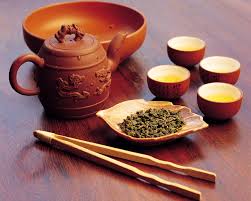 Tea is the second most consumed beverage in the world, after water, yet in some cultures it is taken on more elevated occasions, such as the tea ceremony in China and Japan, which use precise rituals to brew and serve the tea in a refined setting, such as the tea house. One such tea ceremony is the Gongfu tea ceremony, which uses a small Yixing clay teapot and oolong tea.
Tea is a permanent fixture in most countries but in Arab cultures, it is considered a focal point for any social gathering. In Pakistan, both black and green tea are very popular. The favored green tea known as kahwah is served after every meal in the Pashtun and Khyber regions. In Kashmir, Kashmiri chai or noon chai is served at weddings and throughout the winter months at kiosks at the side of the road. This tea is made with pistachios, almonds, cardamom and occasionally cinnamon and is a pink, creamy tea. In Punjab, a similar concoction, known as chai, is the preferred domestic drink. But in Borthern Pakistan, a salty, buttered, Tibetan-style tea is the tea of choice. If you are a visitor to Iran, tea will almost certainly be the first thing offered to you.
In the USA and Canada, about 80% of the tea drunk will be consumed as iced tea. In Switzerland too, iced tea is popular but they also add Alpjne herbs to the mix, alongside the more usual lemon. In India, tea has been declared the national drink and is consumed daily, in copious quantities. When bought from a street vendor, it is bought in doses of small cups, rather than one large one, and these cups are known as cutting cups. Here, in the UK, tea is considered a part of our culture and (according to Goscinny & Uderzo, in Asterix in Britain, even battles are not exempt) ‘everything stops for tea.’
 Caro Field Author
Wow what a lot of history. As you may have seen in CHS posts tea has a history here in the Carolinas. Good work!
Thanks Alessa!
I’ve got all sorts of teas in my cupboard but the only one I drink is bog standard builders tea, black no sugar. I love the smells of lapsong and earl grey etc but I just don’t really want to drink them. I do keep trying promise 🙂
Well, it’s just one of those things…you do or you don’t! Maybe you should start transitioning by drinking something in between like Keemun.,,?