• About Caro Ness

Caro Field Author

~ Thoughts and musings and poetry

Caro Field Author

Category Archives: Uncategorized

The Schoolhouse

01 Friday Mar 2013

Posted by Caro Field in Uncategorized

≈ 27 Comments

Some of you will know that I have been writing poems recently about different blogs that I enjoy, encouraging you to go check them out. Today, I am doing the same with the wonderful blog Seth Snap but in a slightly different way.

This is the latest photo by Seth Johnson on his great blog Seth Snap. He posts a photo every ten days or so and invites his followers to write anything they like about how it makes them feel, from one word to a short story. This is mine for his latest photo in the series.

I00009PcoRWNxCLYCold, cold days,

Blackboard chalk,

Learning to read,

Being told not to talk.

Discovering maths,

Finding a voice,

Taking new paths,

Discovering choice.

This house represents a lost generation,

Who knew the true value of a good education.

This house isn’t much, it is small and austere,

But a community’s foundations were all built from here…
Vomiting Chicken

19 Tuesday Feb 2013

Posted by Caro Field in Uncategorized

≈ 18 Comments

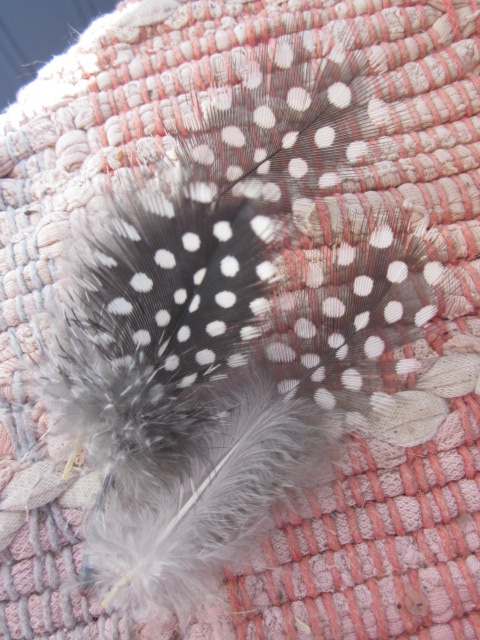
Guineas-Amalias-costume-0081-1Pardon me if this poem or plot starts to thicken,

But there’s an exceptional blog known as Vomiting Chicken!

What a name for a blog! It has wit and pzazz!

It’s full of family, good humour, and all of that jazz!

Tales of Little Mack, horses and severe winter frost,

When catching a guinea, the battle’s usually lost,

How the worms from the worm farm tried to make an escape,

Till they got moved and rehoused in a more congenial place,

Don’t take my word for it, why don’t you go ask her,

Just what Amy’s chickens are up to up there in Nebraska.

They have names like Babes, Ginger, Silk, Oakley and Puff,

Now seriously reader, I just can’t get enough,

Of their battles with an oppossum of gigantic size,

Who attempted to take all those chickens by stealth, by surprise,

But was eventually trapped and dispatched by  brave Grandpa’s gun,

So the hens could roost in peace in their safe chicken run.

Dear readers, I hope, reading about it, you’ll all take my cue,

And go pay a  visit to this blog site without more ado!

Your Eyes

08 Friday Feb 2013

Posted by Caro Field in Uncategorized

≈ 12 Comments

IMG_0015They say eyes are windows to the soul,

For you, it’s true, I see the whole,

Extraordinary, wonderful person you are,

My touchstone and my shooting star.

Your eyes show compassion and belief,

They bring me succour and relief,

They stretch my mind, they ease my pain,

They make me smile and laugh again.

They stroke me like a soft caress,

They’re full of hope and tenderness,

They’re subtle, loving, gentle, tender,

They have a certain jewel-like splendour.

They’re kind, forgiving, loving, true,

They always see the clearer view,

Your eyes display your unique heart,

That always takes another’s part.

They show a strong, protective urge,

In them, these instincts linger, merge.

For them, the world’s a treasure chest,

Of information, to learn, digest.

Through them, this life’s exciting, new,

Above all, your eyes are the essence of you.

And there’s one truth, of which I’m sure,

These sentiments are honest, pure,

So I confess, I’m a devotee,

For when you look my way, you just see me….

Spring

12 Saturday Jan 2013

Posted by Caro Field in Uncategorized

≈ 18 Comments

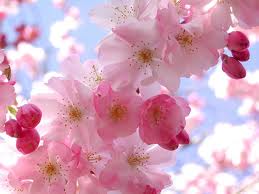
I love the Spring. It means so many things to me, not least a new beginning…

Image

Spring is my favourite season of the year. Why? Because it is the season of new beginnings, of rebirth, renewal, rejuvenation, regrowth. At the Spring equinox, the days are almost 12 hours long, with day length increasing as the season unfolds.

In most of the temperate zones in the North, the months of Spring are usually regarded as March, April and May. In the South, they are September, October and November. In Sweden, meteorologists define Spring as beginning on the first occasion that the temperature rises above 0º Celsius for 7 consecutive days. This means that in different parts of Sweden, Spring might start on a different day, depending on the elevation and latitude of the place concerned! In the USA, the March equinox is often regarded as the first day of Spring, and the Northern solstice as the first day of summer, or more fancifully, by Groundhog Day. In South America, the year was broken up according to solstices and equinoxes. The Ara Pyau, or New Age, ran through Spring and Summer and the Ara Ymã, or Old Age, marking Autumn and Winter. According to the Celtic calendar, Spring starts at the beginning of February near Imbolc/Candlemas and ends in early May with Beltane.

In Spring, the Earth’s axis tilts toward the Sun, and the days get longer and warmer. But this season can also bring with it unstable weather in the form of flooding from snowmelt, thunderstorms  or tornadoes. Akitu was a Spring Festival in ancient Mesopotamia. In Australia, the Melbourne Cup, is held on a public holiday in Victoria in the Spring and it is known as ‘the race that  stops the nation’. Nowruz, or New Day is celebrated by Persian people worldwide as the first day of Spring and in India Holi, or the festival of colours, is celebrated by the Hindus to mark the end of winter.  it is, of course, one of Antonio Vivaldi’s Four Seasons.

Image

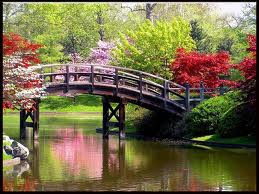
Consider also, other meanings for the word ‘spring’. It can mean to jump or leap, it can refer to a source of water, it can represent a tightly coiled piece of metal. All of these items suggest a sudden, vigorous activity. The word spring comes from the German word, spreng, meaning to jump, and about 1000 years ago this mutated to spryng in Old English. Prior to the season being named for the fact that winter was bounding forward into summer, it was known in Old English as langiton because the days were lengthening. This word survives in modern English as lenten or Lent.

Image

So clearly my forebears too welcomed the arrival of Spring as a time of new beginnings, of cold ending and nature reasserting itself. I see it as a blueprint for new discoveries, a time for change or reacquaintance, above all, a time of  hope… do you?

07 Monday Jan 2013

Posted by Caro Field in Uncategorized

≈ 4 Comments

Give it a go!

Caro Field's avatarCaro Field Author

Image

I love to sing! Don’t you? It lifts my spirits, fills my heart, nourishes my soul. Whether it is singing in a choir or singing alone in the shower, it cannot fail to energise, enthuse and yes, surprise.

There is that soaring sense of achievement when you hit that top ‘A’. A sense of shared accomplishment when a harmony is perfect. A triumph gained from distinguishing the individual notes of a broken chord or arpeggio. The magic of turning mere speech into lyrics by the imposition of rhythm, of tonality. Accompanied or a capella, a song is a sheer expression of creativity and joy.

Recently, with hip hop music, we have seen the evolution of the voice being used as a kind of vocal percussion, aka beatboxing. In Turkish and many African and middle-Eastern countries, singers employ elaborate untexted vocal improvisation within their musical tradition. Such music existed long…

View original post 372 more words

Aside

Laughter

30 Friday Nov 2012

Posted by Caro Field in Uncategorized

≈ 1 Comment

With thanks to the wonderful Jackie Guy, to whom this post is dedicated.
Laughter. Such a wonderful word! Such a fabulous sensation! Such a tremendous feeling. Laughter, it seems to me, is almost as precious as the air we breathe… I love to laugh. How cool is it to share something funny with someone you love?  Just how GOOD does it make you feel?
And then the words we use to describe the way we laugh. Have you ever stopped to consider them? It is almost as if they were anthropomorphic or onomatopoeic. Giggle. Snigger. Chortle. Chuckle. Guffaw. Titter. Cackle. Snort. And perhaps, more loosely, making whoopee?! And the act that produces laughter? Beguilement. Pleasure. Diversion. Cheer. Gratification. Fun. Merriment. Mirth. Each one so perfectly describes the way we felt at the time. The different circumstances that have made us feel happy.
And how about the emotions we experience when we laugh? We fizz, we sparkle, we shake, we crack up. Research has shown that the health benefits of laughter are enormous. Research studies have shown that laughter can relieve pain, reduce stress, bring greater happiness, increase immunity. Positive psychology maintains that a propensity for laughter and a sense of humour is one of the 24 core signature strengths that we can possess. One study maintained that children laugh as many as 400 times per day, and adults only 15 times. That is a pretty poor effort on the adult front, don’t you think?
Consider this: laughter  increases our level of endorphins and neurotransmitters. It enhances the effect of T-cells, and encourages further growth of antibody-producing cells, strengthening the immune system. A deep belly laugh exercises the diaphragm, contracts the abs and works the shoulders, leaving muscles relaxed and de-stressed afterward. Laughter provides both physical and emotional relief, a workout for the heart, and distracts us from any negative emotions. Most important of all, it is a sociable process, it connects us to others. Laughter’s contagious in the best of all possible ways.
My good friend, Jackie Guy, a fellow Jamaican, always has me in stitches every time I see him. Sadly, for my emotional health, this is not often enough. Happily, for the muscles in my abdomen, it is probably just as well! He always walks on the sunny side of the street, even when troubles might reasonably wear him down. He is a positive force for good!  Happily, his myriad contributions to this world of ours have recently been recognized with an MBE.
So let me leave you with a word from the great man himself. With the last joke Jackie told me.
A Jamaican was asked to distinguish between the word “finished” and the word “complete” because they were synonymous in the dictionary.
The Jamaican replied, “Well, when you find a good woman, your life is complete.”
“When you find a bad woman, you’re finished!”
“But when a good woman find you with a bad woman, your life is completely finished!”

THE PERFECT CUPPA

29 Thursday Nov 2012

Posted by Caro Field in Uncategorized

≈ Leave a comment

My friend, Trisha, has an abiding affection for all matters related to the noble Camellia sinensis plant. She would pore for hours deliberating which teas to buy from her favorite online or mail order emporia. She was always the first person you knew to try a new brand of tea. She could pontificate for hours on its history, it’s cultivation, it’s properties.


Actually, she was fascinating! She educated me, for example, on the fact that white, green and black tea, oolong and pu-erh are all harvested from this same plant, but are processed differently, to attain different levels of oxidation. She explained that Chinese tea is a sinensis varietal, and Assam tea an assamica varietal. Cultivars, like Uji Hikari, a premium tea developed in Kyoto for producing matcha tea, simply tripped off her tongue.


She could regale me for hours on the delights of Nilgiri tea. How it was grown at 1,000 to 2,500 metres and that it was subtle, gentle, so often it would be blended with other more robust varieties. She could pontificate for hours on its health benefits. That in traditional Chinese Medicine its leaves were used to cure asthma, angina, coronary artery disease. That tea extracts were purported to have antibacterial actions.


She could tell you that in Britain we drink a staggering 165 million cups of tea a day; that it should sit for six minutes before drinking so as to cool to 60 degrees, the optimum temperature to release the flavour; that the average Briton makes their first cup of tea at seven and a half years old.


But best of all, she grew her own. She had trees of different ages on her tiny terrace. She would only ever harvest the leaves when her plants were at least 3 years old. It was a ritual. She would only pluck the youngest shoots, the tenderest buds, from her Oolong bushes. She would then spread them out in the sun for three quarters of an hour before bringing them indoors to rest at room temperature for a further 2 hours. She would stir the leaves halfway through the drying time and leave them till they turned red at the edges. Then into the oven at 250F for 20 minutes on a baking sheet, and from there to an airtight Kilner jar. And then, if you, were lucky, you would witness her very own tea ceremony. Tricia ran a tap for a while, to aerate the water and then fill her kettle and boil the water just once, or else the tea tasted flat. She warmed the pot first, with a little boiling water, then the cups in turn from the teapot. Then she’d scatter a teaspoon of loose tea per person into the pot, and one for the pot itself. She’d then pour the boiling water into the pot, stir and leave it for 4-5 minutes to brew. Remove the leaves so she could infuse them again if necessary, and finally, pour the tea. Bliss!

FLORAL SALMON (further culinary disasters in the USA)

28 Wednesday Nov 2012

Posted by Caro Field in Uncategorized

≈ Leave a comment

I was cooking in America, for a wealthy family, with my sister, Julia, as I recalled in my last post. We had a super important meal we were cooking for. The guests included George Bush Senior and the late Malcolm Forbes. Salmon had been requested.

My sister, by now, had cooked for the Frelinghuysens for several years. This was my first introduction to them. A moderately wealthy family by American standards, they did not make it anywhere near Forbes’s 400 despite the fact that Mr F’s father founded Chase Manhattan Bank!! But they counted Forbes as one of their family friends and he was the guest of honour.

We went down to the dock. We bought a giant salmon.We lugged it back to the house. We discovered that it was SO huge, it barely fitted into the Aga. It DID, but with only millimetres to spare.

Later that evening, we were just about to serve the main course (for some reason, Mrs F. had requested finger food hors d’oeuvres in the living room), when Mr F. came into the kitchen complaining that Forbes and George Bush Snr were the only 2 guests that made him laugh and they were deep in conversation. The rest of the guests his wife had invited were dull and he’d have far more fun with us, so what could he do to help?

My sister told him he could take the salmon out of the oven but to exercise caution because it was a tight squeeze. He did so, whilst filling us in on just whom we were cooking for. He wasn’t really paying attention to what he was doing, knocked the pan on the Aga on taking it out…. and accidentally severed its head.

He went into a tail spin. He was like Basil Fawlty on acid, except he was built like Manuel, the waiter. My sister, with great sang froid, handed him a large brandy and told him to go back to his guests. She told him that whatever happened next, as far as the salmon was concerned he should take in his stride and never give us away.

The minute he was out of the kitchen, she too went into meltdown because she had nothing to disguise the decapitation. All the tomatoes and cucumber were part of a complex salad. I said that she needed to carry on with everything else and I would go into the garden to see if I could find something to disguise the catastrophe.

I didn’t mention the fact that the living room had gigantic picture windows on 3 sides, giving panoramic views over the garden, did I? This meant that I had to scuttle from tree to tree and bush to bush, in order to avoid being seen by the guests. I felt a bit like Hiawatha evading her captors. I had gone out armed with a gigantic pair of kitchen shears, normally used for de-shelling crab and lobster. I guess I was out there for about 5 minutes, when I spotted a bank of Michaelmas Daisies. I swiped the lot.

I returned to the kitchen with arms full of flowers, to Julia’s complete astonishment. She asked me what on earth I thought I was doing? I replied, “We are going to dress the salmon with daisies, because they were all I could find!!” So we washed the flowers, getting rid of the pollen. We created a collar across the severed head, strewed flowers around the plate, and we called the guests to dinner.

When everyone was seated, Julia came in bearing a platter with the decorated salmon upon it. She arrived to applause, oohs and aahs, and a question. What was it?

With great aplomb, she replied, “It’s a family recipe. It’s called Floral Salmon!” It was a huge success. Indeed, it did look very beautiful.

Many years later, Julia met the Frelinghuysen’s new Chef, who said that she loved working for them. But she couldn’t understand why, every year, they always made her cook, on a particular day in August, a meal known as Floral Salmon.

My sister and I knew.

THE VANISHING SOUFFLE

19 Monday Nov 2012

Posted by Caro Field in Uncategorized

≈ 5 Comments


Just before I went up to university, i joined my sister (a chef) to cook for a really wealthy American family in Maine for the whole summer. This was to earn some dosh for my intended wild upcoming student lifestyle (I earned enough money to give me 3 years spending money, but that’s another story).  The most wondrous fact about our employers was that we had a huge kitchen, an unlimited budget and a Mercedes Benz at our disposal for collecting the groceries we would spend hours poring over in the local markets.


Because we were spoilt budget wise, my sister and I would sometimes practice a meal that we were going to feed our guests. On one occasion we rather daringly (for that read, stupidly) chose Grand Marnier souffle. We timed it exactly so we knew just when it would need putting in the oven to arrive in front of each guest piping hot. We decided to cook it the night they invited every famous politician who was in town at the time. It included a very lugubrious Austrian gentleman, who dominated the conversation by saying very little but taking a long time to do it…. and our timing was therefore in peril.


As we were clearing the plates away (we had given them a salmon en croute), we heard a loud ‘pop’ from the kitchen. We approached the AGA (bought for my sister, I might add)  with some trepidation, and opened the door. The combination of overcooking and alcohol had taken its toll. It had done for our puds. The souffle had spontaneously combusted. There were a host of beautiful, empty ramekins in the oven and not a scrap of souffle mixture in sight. So when cooking this marvellous pud…make sure you do not have a boring Austrian gentleman at your dinner table….


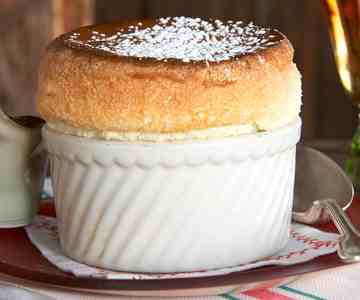
 Image

This is what is SHOULD look like!


GRAND MARNIER SOUFFLE


Ingredients:


3/4 cup granulated sugar, divided

4 large egg yolks

3 tablespoons Grand Marnier or a smidgeon more to make extra boozy

3/4 teaspoon vanilla extract

6 large egg whites

1/4 teaspoon cream of tartar

1/8 teaspoon salt

1 teaspoon powdered sugar

Preparation

  1. Preheat oven to 400°; place a baking sheet on the middle rack.
  2. Coat 6 (8-ounce) ramekins with cooking spray.
  3. Sprinkle each dish with 2 teaspoons granulated sugar, shaking and turning to coat.
  4. Place egg yolks in a large bowl; beat with a mixer at medium-high speed until thick and pale, slowly adding 1/4 cup granulated sugar
  5. Beat  for 2 minutes. Then beat in liqueur and vanilla.
  6. Place egg whites in a large bowl; beat with a mixer at high speed until foamy. Add the cream of tartar and the salt; beat mixture until soft peaks form. 
  7. Gradually add 1/4 cup granulated sugar, 1 tablespoon at a time, beating until stiff peaks form. 
  8. Gently stir one-fourth of egg white mixture into liqueur mixture. Gently fold in the remaining egg white mixture
  9. Divide evenly among the prepared ramekins.
  10. Place soufflé dishes on baking sheet in oven; bake at 400° for 10 minutes or until tall and golden brown (soufflés will rise 1 1/2 to 2 inches above the dish rim). Quickly dust soufflés with powdered sugar. Serve immediately.

THE DUNNS RIVER FALLS

17 Saturday Nov 2012

Posted by Caro Field in Uncategorized

≈ 1 Comment

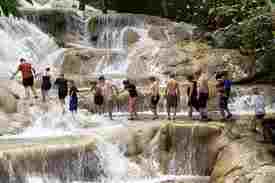
The Dunns River Falls lie in St Ann Parish in Jamaica. On the sea coast between St. Ann’s Bay and Ocho Rios, they are now a big tourist attraction. Back in the 1960s, when I was growing up, they were a much more peaceful affair. Partly because it was then that they were filmed for the eponymous scene in the film, Dr No, when Honey Ryder walks out of the sea, with her seashells, into the clutches of Sean Connery’s James Bond and consequently, made them famous.

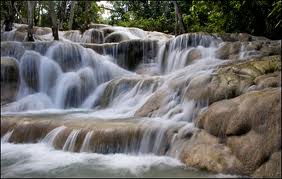
Because of Jamaica’s humid, tropical climate, rainwaters seep through small fractures in the limestone, dissolving the lime on its way. These fissures squeeze space for themselves in the rock, expanding to create room for the water. Gradually they turn into underground streams and caverns, which on occasion, force themselves up to the surface. Where they do, they are known, rather romantically, as river rises…

Image

As the water pushes its way toward the light, the lime in the stone leeches out, creating deposits, which over generations have become a giant stairway. So this is not just a waterfall. It is a set of limestone terraces, a giant staircase. Formed by river rises, it has been carved out of, and into the landscape. The river hustles, rushes, meanders over these steps and empties into the Caribbean sea. The limestone is travertine, a pale white stone that is almost luminous. It was used to build the Sacre Coeur Basilica in Paris. This gives you an idea of its beauty.

The vegetation crowds the falls and terraces as if to try to hold back the water. It meets overhead, creating a shadowy ceiling, over one of the most beautiful natural staircases in the world. Climb! Climb up from the beach. Stop on the way, to bathe in the pools and lagoons that have imprinted themselves there. Lie back in the warm water and look up. Look up through the canopy at a brilliant azure sky.

Image

The total height of the falls is about 55 metres, the length of them is about 180. It takes about 1.5 hours to limb with a guide, holding hands in a human daisy chain. It is the site of the battle of ‘Las Chorreras’ between the English and the Spanish Expeditionary Force out of Cuba, for the ownership of the island. Charles Pryce and the English won and became the first owners of this extraordinary phenomenon. I urge you to don your white bikini, as Honey Ryder did, and make that exhilarating climb.

Image

← Older posts
Newer posts →

A Four Letter Word – Buy Here

My Facebook Page

My Facebook Page

Enter your email address to follow this blog and receive notifications of new posts by email.

Join 1,534 other subscribers

Gallery

This slideshow requires JavaScript.

Blog Stats

  • 97,644 hits

Tags

artwork barcelona beach bear bend boat books brazil bridge butterfly canal caravan cars cats celebrity chef child chimes china Crowcombe desert dogs drinks eca embellishment equestrian fame flowers France friendship green guitar handbags happiness home Italy Japan joy lavender London love map music nature O P poetry puddings rain rainbow river rivers rosd salmon sand sea ships shoes shopping sky sleigh snow somerset spain stardom statue sunrise sunset The Road to Crowcombe trees walk walking weather winter world

Blog at WordPress.com.

  • Subscribe Subscribed
    • Caro Field Author
    • Join 409 other subscribers
    • Already have a WordPress.com account? Log in now.
    • Caro Field Author
    • Subscribe Subscribed
    • Sign up
    • Log in
    • Report this content
    • View site in Reader
    • Manage subscriptions
    • Collapse this bar
 

Loading Comments...