• About Caro Ness

Caro Field Author

~ Thoughts and musings and poetry

Caro Field Author

Category Archives: Uncategorized

Paws For Thought

24 Wednesday Jul 2013

Posted by Caro Field in non-fiction, Uncategorized

≈ 12 Comments

Macgregor, my dog, was something of a living legend. This dog had always had a big personality for a small dog – a Jack Russell. Not as young as he used to be, a venerable fourteen and a half when he died, he still had the spring in his step of a much younger dog. When I first got him, as a puppy, he was small enough to sit in the palm of my hand.

I acquired him quite by accident because the couple who were going to buy him pulled out at the last minute. I happened to be at his breeder’s house when they rang to tell her they could not buy him. I originally tried to refuse, but then she let him out his pen. He scampered out and started trying to chase butterflies, and I simply fell in love. I took him away with me the same day. When we took him, I promised faithfully that I would not put him on the ground where he was in danger of picking up diseases, because he had not yet had all his injections.

We repaired to the local pub, where we put him on the table. It was one of those benches that is both seat and table in one.  Whilst distracted by a duck fight at the end of the beer garden, we heard a slurping noise and found Macgregor almost doing a handstand in order to drink his way down a beer tankard.

A few months in to my relationship with him, I got up at 6 every day so I could exercise him before I left for work. We  would walk then I put him in a pen between the house and the river, because we lived in a mill. He was penned in using an electric sheep fence. It was orange and it was plastic. He had about a quarter of an acre of garden, the river to drink from and his kennel to shelter in from rain or wind.

Every day we would say our fond farewells and he would bark his goodbyeImage all the way to the car. Despite hating leaving him alone, I would get in my car and go. A hard day’s work and I would return home, rush to his pen and there he would be. His entire body rocked to the wag of his tail and he grinned from ear to ear. I would reach over,  pluck him out and lift him close for a cuddle. He would attempt to lick any part of me he could reach and the unmistakable smell of fish clung to his breath. This last fact always puzzled me. Yes, there were certainly fish in the stream, small trout to be precise, but he could never catch them, surely?! So why did his breath smell of it?
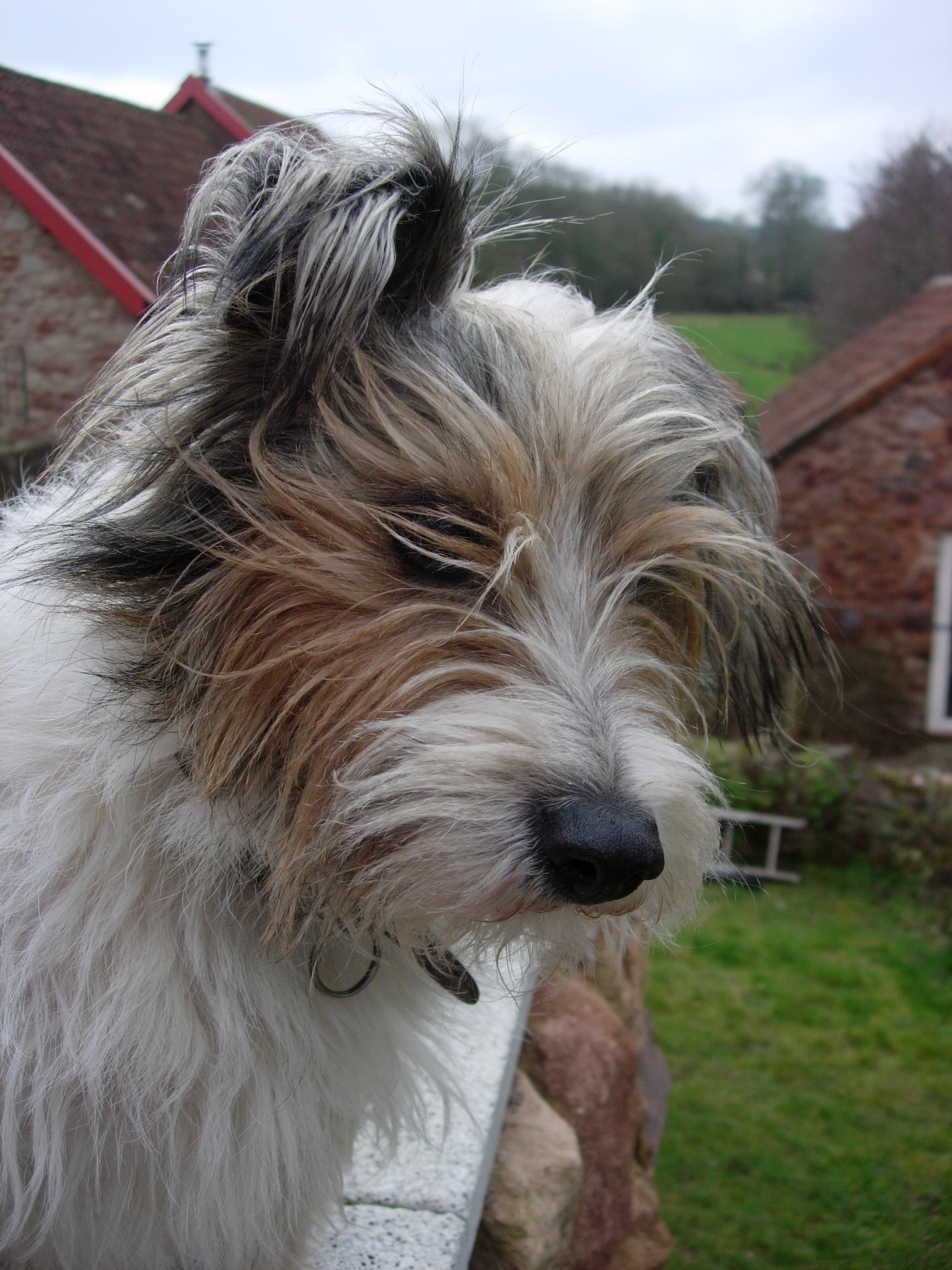
I came back from work a few weeks later and there was no sign of the dog. I searched everywhere, walking miles through the fields and woods, and up by the reservoir, where he often took himself for impromptu walks…nothing! I rang everyone I could think of who he might have gone to visit (he had a habit of going on small trips to friendly neighbours) – nothing. Finally, a friend,who had been accompanying me suggested ringing the police to see if he had been handed in for any reason.

Thinking it highly unlikely, I rang. That was when you could get the number for your local police station, rather than being connected to a call centre in Dagenham…I got through straight away, and as I was saying, “Have you, by any chance…” I heard him bark in the background, and said, somewhat surprised, ‘Oh! You have got him!”  “Is he yours?” the voice asked. “Yes!” I said. “Describe him to me!” said the voice. So I did. There was a deeply drawn sigh and then the voice said, “PLEASE come and get him as soon as you can? I’ll explain when you get here…” I clattered the phone back in place and set off at a run.

Without breaking the speed limit, I arrived with my friend at the police station in approximately 8 minutes, having found a parking space right outside the door. We raced in, and could hear him in the background…‘Thank heavens!” said the policeman…’”he has been driving us nuts!”

It transpired that he was too small and skinny to stay in a dog pen, he just scooted through the bars. Consequently, the police had to put him in a people cell, which had sheet metal to waist height. Macgregor’s way of coping with this was to leap so he could see over the sheet metal, and assess what was going on. Trouble was, every time he got to the top of his leap, he barked. This had gone on, incessantly, for four hours. The police, by then, had had enough.

When we fetched him, we asked why he’d been brought in, and we slowly pieced together the truth…. Every time I left in the morning, he would wait for the sound of my engine to dwindle away to a murmur… When it did, he would find a spot that was a little less taut than others. Bearing with the pain of being repeatedly zapped by electricity, he would wriggle out underneath the fence. Once free of it, he shook himself off and trotted off down the road and into the high street. He then proceeded to force himself in through every cat flap (this was before the days of ones that only allow those with a chip under the skin of the cats concerned to enter). He guzzled his way through every dish of cat food in the street that had been left obligingly within reach… (hence the fish breath) until he was caught in the act. A deeply friendly dog, despite teeth far too big for his muzzle, he allowed himself to be scooped up and taken down the ‘yard’.

Macgregor came home that night happy, but with sore paws and a case of laryngitis that lasted  a week…oh, and with a police record!
The Tea Bag Et Al

08 Monday Jul 2013

Posted by Caro Field in Uncategorized

≈ 12 Comments

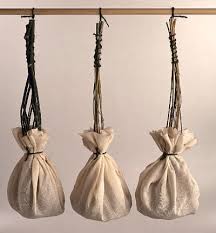
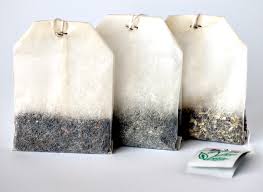
images-15The arrival of tea in Britain in the seventeenth century altered the drinking habits of this nation forever. The late eighteenth century saw black tea overtake green tea in popularity for the first time, which also encouraged the addition of milk. In the nineteenth century widespread cultivation of tea in India began, leading to the import of Indian tea into Britain overtaking the import of China tea. And in the twentieth century there was a further development that would totally revolutionise  our tea-drinking habits – the invention of the tea bag.

images-14The tea bag was invented because it was believed that for tea to taste its best, the leaves ought to be removed from the hot water at the end of a specific brewing period. Then there was also the additional benefit of convenience – a removable device means that tea can be made as easily in a mug as in a pot, without the need for a tea strainer, and that tea pots can be kept clean more easily. But the earliest examples of removable infusing devices for holding tea were not bags. Popular infusers included tea eggs and tea balls – perforated metal containers which were filled with loose leaves and immersed in boiling water, and then removed using a chain that was attached to them.

Needless to say, it was in America, which loves labour-saving devices, that tea bags were first developed. In around 1908, Thomas Sullivan, a New York tea merchant, started to send samples of tea to his customers in small silken bags. Some assumed that these were supposed to be used in the same way as the metal infusers, by putting the entire bag into the pot, rather than emptying out the contents and so the tea bag was born by accident. Responding to the comments from his customers that the mesh on the silk was too fine, Sullivan developed sachets made of gauze – the first purpose-made tea bags. During the 1920s these were developed for commercial production, and the bags grew in popularity in the USA. Made first of all from gauze and later from paper, they came in two sizes, a larger bag for the pot, a smaller one for the cup. The features that we still recognise today were already in place – a string that hung over the side so the bag could be removed easily, with a decorated tag on the end.

images-16While the American population took to tea bags with enthusiasm, the British were somewhat wary of such a radical change in their tea-making methods. This was not helped by horror stories told by Britons who had visited the USA, who reported being served cups of lukewarm water with a tea bag on the side waiting to be dunked into it, which Britons thought totally unacceptable.

The material shortages of World War Two also stalled the mass adoption of tea bags in Britain, and it was not until the 1950s that they really took off. The 1950s were a time when numerous household gadgets were targeted as being tedious household chores, and solutions were offered to remedy the situation;  tea bags gained popularity on the grounds that they removed the need to empty out the used tea leaves from the tea pot. The convenience factor was more important to the British tea-drinker than the desire to control the length of infusion time, hence at that time, the Britons often used tea bags that did not have strings attached. It was Tetley in 1953 that really drove the introduction of tea bags in Britain, but other companies soon caught on. In the early 1960s, tea bags made up less than 3 per cent of the British market, but by 2007 tea bags made up a phenomenal 96 per cent of the British market, and there can hardly be a home or workplace in Britain that does not have a stash of the humble, but irreplaceable, tea bag.

The 1920’s was the ‘decade of the teabag’, when its commercial use developed from the tea egg or tea ball into the tea bag. Around 1935 Messrs Joseph Tetley who had a powerful associate company in the States made a tentative approach to market teabags in the UK. Initial approval was slow but Tetley didn’t give up. The teabag market eventually began to grow in the UK in the 1960’s when approximately 5% of tea was consumed in bags. By 1965 it had risen to 7% and now, 96% of tea consumed in the UK is done so with teabags.

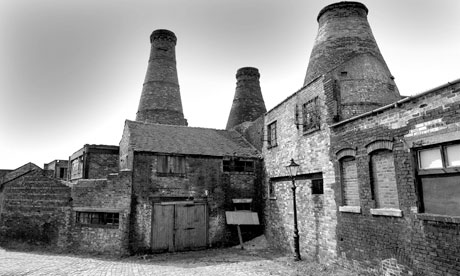
Potteries-factory-006The earliest tea cups had no handles, as they were originally imported from China.. As tea drinking gained popularity, so did the demand for more British-style tea ware. This fuelled the rapid growth of the English pottery and porcelain industry, because of the insatiable appetite for tea. Most factories making tea ware were located in the Midlands area which became known as “The Potteries”. Today, many of the original Potteries are still producing world famous porcelain such as Wedgwood, Royal Doulton and Aynsley.

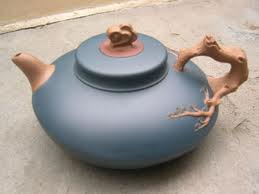
In the earliest history of tea drinking, tealeaves were simply boiled in open pans. It was the Ming Dynasty that led to the fashion for ‘steeping’ the leaves and therefore led to the need for a covered pot that would allow the leaves to infuse and keep the tea hot. Ewers, resembling the modern teapot, that for centuries had been used for wine were now adapted to brew tea. By the time the Dutch started exporting various exotic cargo from China back to Europe, the concept of the teapot had developed further. The teapots that they brought back were small, with broad bases and wide spouts, whichimages-17 would not clog easily. As Europe had never seen such Chinese stoneware, it took Dutch potters until late 1670’s to reproduce the heat-resistant pots. Two of The Netherlands’ most successful potters the Elers brothers settled in Staffordshire and established the English Pottery industry.

The first containers used for the domestic storage of tea were the jars that arrived from China with shipments of tea. Gradually, European jars and boxes were developed in a wide range of shapes and sizes – round, square and cylindrical boxes, jars and bottles, in silver, crystal, stone and wood. The word ‘caddy’ was not used until the end of the eighteenth century when the word kati – denoting a measure of approximately 1 pound and 5 ounces – was adapted for English usage.

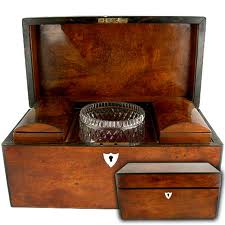
Eighteenth century tea chests or caddies had two or three separate compartments for different teas and sometimes also a mixing bowl or a bowl for sugar. All were lockable, and the lady of the house guarded the keys, as tea was far too precious and expensive to risk being pilfered and the caddy stayed in the family drawing room.

images-18

The Chinese  started producing fruit shaped containers early in the eighteenth century, and English and German wooden imitations began to appear as pears, apples, strawberries, pineapples. Some were painted but most were varnished and their loose-fitting, hinged lids opened to reveal a foil-lined cavity that held the tea. As the price of tea decreased towards the end of the nineteenth century, tealeaves were transferred to practical tins and boxes that were just stored in the kitchen the use of lockable caddies and ornate jars declined.

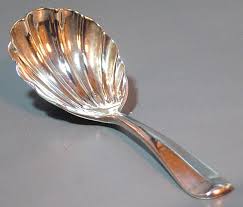
The earliest caddy spoons were long-handled ladles made for use with box-like tea chests. From about 1770, short-stemmed caddy spoons began to appear, designed to fit into squatter caddies, often in the form of a miniature scallop shell. This motif originates from the fact that oriental merchants always placed a real scallop shell in the top of tea chests to allow potential buyers to take a sample from the chest before deciding to buy.

images-19Spoons have been manufactured in the form of leaves, acorns, salmon, thistles and shovels but the most popular has always been the shell, the jockey’s cap, the hand and the eagle’s wing. The ‘caddee shell’ motif also often appears on teaspoons, tea strainers and sugar tongs.

…With Every Breath…

15 Saturday Jun 2013

Posted by Caro Field in Uncategorized

≈ 15 Comments

Several people have asked me if Anita-Clare Field writes poetry, and more particularly, if she has written about her love for me since I have written a great deal of poetry about my love for her, for us…  So here you are, a poem she wrote to me about her love for me, that she told me I could share with you. It is simply the most beautiful, heartfelt piece of poetry that anyone has written for and about me. The raw emotion is palpable and more extraordinary for the fact that I know that she feels all these emotions for me,  just as I do for her, and I am humbled by this wonderful love we have for each other.

201459_10150225083113939_2284435_oWhat it feels like when I hear your voice

What it feels like when you hold my hand or

Massage my feet or rub my back

You take the feeling away, the tense, scary

Uncontrollable urge to run, you ground me

and with every breath In my body I love you.


You are my reason, my compass the person who make sense of black

Who is the one who holds me tight when I am sad or talks endlessly about

The big wide world and all its shiny colours and smells and tastes.

You make everything alright, everything real and I smell flowers

and taste wine and hear music again

and with every breath in my body I love you .

You make me see again, the plain truth, the good the bad and the ugly.

You make  ugly beautiful,  bad bearable and with every breath in my body I love you. 

You make me believe in me again, you make me breathe in life  and entrust your heart in my hands and I feel so blessed and scared in equal measures but I know one thing, I love you with every breath in my body. 

I will be your constant,  your love and guide because you are my reason, my angel, my light. my  warmth always know my darling this, i love you with every breath in body. 

Ironman 70.3

04 Tuesday Jun 2013

Posted by Caro Field in Uncategorized

≈ 11 Comments

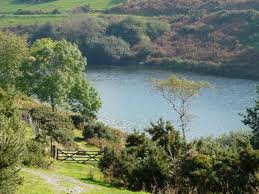
Jochen Langbein, of Taunton Athletic Club, a club which my daughter, Isla, belonged to, having read my post on Ironman, mentioned to me the fact that the very first Half Ironman, Ironman 70.3, was put on in the UK, at the Ironman Qualifier site on Exmoor at the incredibly beautiful Wimbleball Lake. So I thought I would write a post about it to celebrate this fantastic event and to suggest that you go and spectate – it is the most stunning location, and the next event there is Ironman 70.3 on 16th June….put it in your diary! 

images-4The very first 70.3 race to ever exist in the world was in the UK – the Ironman 70.3 at Wimbleball Lake on Exmoor. This event has now taken on an iconic status, as do all Ironmans, and fills to capacity every year.  Age Group athletes can qualify from this race for the Lake Las Vegas Ironman World Championships 70.3.

You can download a programme that will tell you everything you need to know, starting with the race day schedule. You will learn that Lake Wimbleball has been nominated to be the first Dark Skies Discovery Site on Exmoor and that Exmoor National Park has been designated an International Dark Sky Reserve, the first place in Europe to achieve this prestigious award. It’ll also tell you that a downside is that you shouldn’t expect to get a mobile signal here!

I learned that Nirvana Europe is  the Official IRONMAN Europe Travel Agent and that they have been moving UK athletes and their bikes to major triathlon and duathlon events, all over the world since 2002. In 2013 they will cater for the travel and accommodation requirements of almost 1,250 athletes travelling to IRONMAN and IRONMAN 70.3 events in Europe, Australia and North and South America. Nirvana are hot on logistics… they know the locations, know the people involved and put in place the most comprehensive race related logistics plan you could hope for if you wish to compete. I also learned you can book to have a pre- and post-race massage. That’s mandatory in my book!

The swim course is one lap, clockwise, starting 20m from the shore of the lake at 7.00 AM, and the second wave at 7.15. Swimming in the lake is forbidden at any other time. From the exit of the swim to transition is approximately 400m on grass. The IRONMAN 70.3 UK Exmoor bike course is a tough two lap course right in the heart of Exmoor National Park. The course leaves Wimbleball lake and follows an anti clockwise loop through hilly terrain in a particularly picturesque part of Somerset. It is 56.4 miles and 3904ft/1190m of climbing over the whole 2 lap course. The run at Wimbleball Lake is a three loop course on a mix of terrain including tarmac, hard pack trail and grass. 13.1 miles long there is 1323ft/405m of climbing over the whole 3 lap course. There is one short sharp climb in the course which is tackled three times, followed by a steep descent. There you are, Ironman 70.3 UK in a nutshell. Why not check it out for yourself? [ http://www.ironmanuk.com/ ]

IM703_UK_2012_200

The Sunshine Award

01 Monday Apr 2013

Posted by Caro Field in Uncategorized

≈ 27 Comments

sunshine-award-1The wonderful and very funny John Hartnett, of http://monkeybellhop.com has nominated me for a Sunshine Award (inspirational and creative recognition).

I am told that I have to reveal 7 things about myself so here goes:

1. I was born in Jamaica.

2. I am about to move into a beautiful new home in London.

3. I spent six months in Russia (St Petersburg) studying Russian at the university there as part of my degree.

4. I am published in 23 countries.

5. I have white-water-rafted down the Zambezi.

6. I got typhoid whilst on holiday!

7. But not least! I am in love with the most wonderful person ever!

The bloggers I am nominating in return are:

1. Anita-Clare Field of http://loverofcreatingflavours.co.uk for being the most wonderful person ever and for creating such a brilliant foodie blog.

2. AmyYoung Miller for http://vomitingchicken.com/ for writing so charmingly about life in Nebraska.

3. Nirrimi Firebrace for http://www.theroadishome.com/ for a wonderful travel blog of sorts

4. Muriel Jacques for http://www.frenchyummymummy.com/ for her observations about being born French but considering herself British and the confusion that ensues.

5. Seth Johnson’s beautiful photographic blog http://sethsnap.com/

6. Reinaldo Ferrer’s wonderful http://urbanwallart.wordpress.com/ which showcases his extraordinary gift as a graffiti artist. I am proud to say that I own 2 of his originals.

7. Sarah for her stunning blog about her home by the sea  at http://www.abeachcottage.com/.

8. Charlie and Caroline’s blog which is a sampler of all kinds of everything http://charlieandcaroline-pedlars.blogspot.co.uk/.

9. Emily Ridley-Fink for http://www.onegirlandheripod.com/ which is the quirky observations of a medical student in Edinburgh.

10. Last, but not least, William Chaney for his wonderful healthy lifestyle blog at http://www.healthyfoodanddiet.com/.

Bad is Good

31 Sunday Mar 2013

Posted by Caro Field in Uncategorized

≈ 4 Comments

ImageI can’t get this urban vocab straight,

I am way beyond my ‘sell-by’ date,

In times gone by, it might seem dull,

There were simple uses for the word ‘scull’,

A bone, some oars, a rowing boat,

And you ‘sculled’ to keep the craft afloat,

Now it means, well what do you think?

Amongst other things, in a single gulp, you down a drink!

And ‘pepperazzi’ take shot after shot,

Of food they’ve eaten, whether you like it or not!

Putting someone ‘on blast’ is extremely cruel,

It means you make them look like a total fool,

What about bare and what about sick?

Not unwell or nude but great or sharp as a tick,

And what of bad? It’s understood,

That now ‘it’s bad’ actually means that it’s good!

Scrimshaw

27 Wednesday Mar 2013

Posted by Caro Field in Uncategorized

≈ 13 Comments

imgres-1

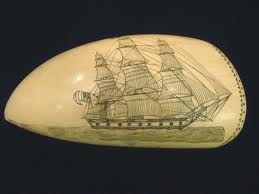
He carved a tooth, a whale’s tooth,

With a picture of his true love on it.

No woman this, but he valued truth,

So it bore the image of his ship.

In minute detail from stern to bow,

With his comrades from the past and now,

From the galley chefs to the lonesome ‘crow’

He polished the piece till you could see its glow,

It was his chef d’oeuvre, his masterpiece,

He used every scrap of skill he had inside,

‘Twas his parting gift, his last caprice,

His present to his son before he died.

Happiest in Hunters

17 Sunday Mar 2013

Posted by Caro Field in Uncategorized

≈ 4 Comments

IMG_3078She’s a blanket romantic, her husband makes cheese,

How chocolate fingers taste best on the high seas,*

And oh, she is pregnant, so she is well pleased.

Fishing for mackerel (Tom caught three for tea),

Stopping off on a clifftop for a pink G & T!

She loves sleeping in tents, she likes pimping mince pies,

Why learning to knit is a pleasant surprise….

How she married her Tom on the step she made with her Dad,

How she likes to do ‘boy stuff’ and just be a lad.

She fancies a shed in which to be creative,

Go visit her blog, before she goes ‘native’!

*Well on the canal in Bath to be exact!

Bek Mugridge

13 Wednesday Mar 2013

Posted by Caro Field in Uncategorized

≈ 10 Comments

   
RHP_7668-1Author Bek Mugridge is a mum entrepreneur,

She was voted a winner down there in Aus,

She’s a horticultural connoisseur,

She’s written a book to help others because

She found that some exercise combatted depression,

So she’d go for long walks whilst pushing her pram,

Her book ‘The Pram Diet’ was her expression,

Of saying ‘This was me before, and this is who I now am’.

She comes from a family of chefs, of cooks,

She loves to garden and grow her own food,

She’s currently working on several new books,

She’s a foodie, so in my book, that’s all good!

She talks about weight loss and PND,

Organic gardening – soil, compost and pests, 

She tempts you with her latest recipe,

Go take a look, this lady’s the best!

The Baggage Handler

08 Friday Mar 2013

Posted by Caro Field in Uncategorized

≈ 15 Comments

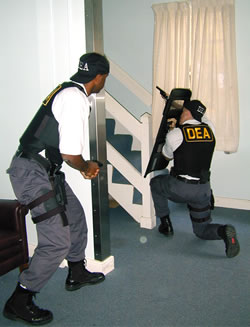
File:DEA-Agents

Baggage Handler Dot Me, a strange name for a blog,

Till you learn that it is a catalogue,

Of the author’s years first smuggling drugs,

Then his years as informant, dealing with thugs.

You will learn about Johnny, the DEA lead,

Read of the satellite TV guy, peddling “weed”,

You learn about Mano, from the Columbia cartel,

Of El Gordo who knew how to acquire, to sell,

You meet up with Tim, who will sell you a Lexus,

But also some drugs concealed near your solar plexus,

He’s had a life that was hard and full of abuse,

But he’s put his experiences to really good use,

His DEA years are in his new book,

And so, my dear reader, why don’t you go take a look?

← Older posts
Newer posts →

A Four Letter Word – Buy Here

My Facebook Page

My Facebook Page

Enter your email address to follow this blog and receive notifications of new posts by email.

Join 1,534 other subscribers

Gallery

This slideshow requires JavaScript.

Blog Stats

  • 97,644 hits

Tags

artwork barcelona beach bear bend boat books brazil bridge butterfly canal caravan cars cats celebrity chef child chimes china Crowcombe desert dogs drinks eca embellishment equestrian fame flowers France friendship green guitar handbags happiness home Italy Japan joy lavender London love map music nature O P poetry puddings rain rainbow river rivers rosd salmon sand sea ships shoes shopping sky sleigh snow somerset spain stardom statue sunrise sunset The Road to Crowcombe trees walk walking weather winter world

Blog at WordPress.com.

  • Subscribe Subscribed
    • Caro Field Author
    • Join 409 other subscribers
    • Already have a WordPress.com account? Log in now.
    • Caro Field Author
    • Subscribe Subscribed
    • Sign up
    • Log in
    • Report this content
    • View site in Reader
    • Manage subscriptions
    • Collapse this bar
 

Loading Comments...