• About Caro Ness

Caro Field Author

~ Thoughts and musings and poetry

Caro Field Author

Category Archives: non-fiction

Bananas

26 Wednesday Jun 2013

Posted by Caro Field in non-fiction

≈ 8 Comments

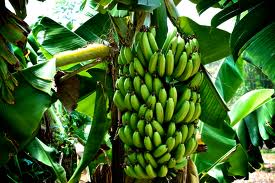
images-5A banana is an edible fruit which grows on several kinds of large, herbaceous flowering plants in the genus Musa. Almost all modern edible parthenocarpic or seedless bananas come from two wild species – Musa acuminata and Musa balbisiana. Musa x paradisiaca is a hybrid. The banana plant grows 10-26 ft (3.048-7.62 m) and belongs to the same family as the lily and the orchid. The cluster of fruits contain anywhere from 50 to 150 bananas with individual fruits grouped in bunches, known as “hands,” containing 10 to 25 bananas. While we are accustomed to thinking of sweet bananas as having yellow skins, they can also feature red, pink, purple and black tones when ripe.

Bananas are thought to be native to South and Southeast Asia, probably to Malaysia around 4,000 years ago, but were first domesticated in Papua New Guinea. From here they spread throughout the Philippines and India. In 327 B.C. Alexander the Great’s army recorded them being grown. Bananas were then introduced to Africa by Arabian traders and discovered in 1482 A.D. by Portuguese explorers who took them to the Americas, the place where the majority of bananas are now produced.

Bananas were not brought to the United States for sale in markets until the latter part of the 19th century by Portugese traders, and were initially only enjoyed by people in the seacoast towns where the banana schooners docked; because of the fruit’s inability to be transported far. But since the development of refrigeration and rapid transport in the 20th century, bananas have become widely available. Today, bananas grow in most tropical and subtropical regions, 107 in total, with the main commercial producers being Costa Rica, Mexico, Ecuador and Brazil.

Bananas are one of our best sources of potassium, an essential mineral for maintaining normal blood pressure and heart function. Since the average banana contains a whopping 467 mg of potassium and only 1 mg of sodium, a banana a day may help to prevent high blood pressure and protect against atherosclerosis. The effectiveness of potassium-rich foods such as bananas in lowering blood pressure has been demonstrated by a number of studies. For example, researchers tracked over 40,000 American male health professionals over four years to determine the effects of diet on blood pressure. Men who ate diets higher in potassium-rich foods, as well as foods high in magnesium and cereal fiber, had a substantially reduced risk of stroke.

A study published in the Archives of Internal Medicine also confirms that eating high fiber foods, such as bananas, helps prevent heart disease. Almost 10,000 American adults participated in this study and were followed for 19 years. People eating the most fiber, 21 g (0.74 oz) per day, had 12% less coronary heart disease (CHD) and 11% less cardiovascular disease (CVD) compared to those eating the least, 5 g (0.17 oz 0z) daily. Those eating the most water-soluble dietary fiber fared even better with a 15% reduction in risk of CHD and a 10% risk reduction in CVD.

In addition to these cardiovascular benefits, the potassium found in bananas may also help to promote bone health, and their antacids protect against stomach ulcers and ulcer damage. In one study, a simple mixture of banana and milk significantly suppressed acid secretion. In an animal study, researchers found that fresh bananas protected the animals’ stomachs from wounds. Bananas work thiis protective magic in two ways: First, substances in bananas help activate the cells that compose the stomach lining, so they produce a thicker protective mucus barrier against stomach acids. Second, other compounds in bananas called protease inhibitors help eliminate bacteria in the stomach that have been pinpointed as a primary cause of stomach ulcers.
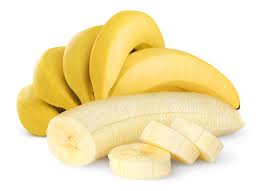
images-6Bananas are also a smart move if you have suffered from a bout of diarrohea, which can quickly deplete your body of important electrolytes. Bananas can replenish your stores of potassium, one of the most important electrolytes, which helps regulate heart function as well as fluid balance. In addition, bananas contain pectin, which helps normalize movement through the digestive tract and ease constipation. Bananas are an exceptionally rich source of fructooligosaccharide, a prebiotic because it nourishes probiotic (friendly) bacteria in the colon. These beneficial bacteria produce vitamins and digestive enzymes that improve the ability to absorb nutrients, plus compounds that protect us against unfriendly microorganisms. When fructooligosaccharides are fermented by these friendly bacteria, not only do numbers of probiotic bacteria increase, but so does the body’s ability to absorb calcium. In addition, gastrointestinal transit time is lessened, decreasing the risk of colon cancer.

About 190,000 cases of kidney cancer are diagnosed each year. Risk factors include smoking, high blood pressure, obesity, and exposure to toxic chemicals such as asbestos and cadmium. Research published in the International Journal of Cancer suggested that regular, moderated consumption of whole fruits and vegetables, especially bananas, can be protective. The results of this large population based prospective study (13.4 years) of 61,000 women aged 40-76, show that women eating more than 75 servings of fruits and vegetables per month (which translates into 2.5 per day) cut their risk of kidney cancer 40%. Among the fruits, bananas were especially protective. Women eating bananas four to six times a week halved their risk of developing the disease compared to those who did not eat this fruit. All of the above, tremendously good reasons to consume a banana a day, don’t you think?.
Conkers (Pt 1)

23 Sunday Jun 2013

Posted by Caro Field in non-fiction

≈ 10 Comments

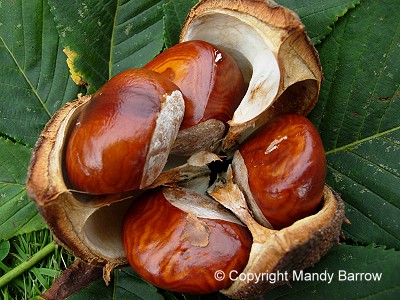
fourThe Horse Chestnut (Aesculus hippocastanum) was first introduced to Britain from the Balkans in the late 16th century, but it was not until about 200 years later that the fruits of the horse chestnut trees were used to play “conkers”. Before that, “conkers” was played with hazelnuts, cobnuts or snail shells. The fruits of this tree resemble those of the Sweet Chestnut (Castanea sativa) tree but they are inedible. As with sweet chestnuts they develop in prickly cases, and are ripe in September and October – the ‘conker’ season.

The “horse” connection is derived from the fact that horse chestnuts were fed to horses in the East as a stimulant and to make their coats shine and the leaf-scars on the twigs have the shape of a horseshoe, including the nail holes. There is also a theory that the prefix ‘horse’ is a corruption of the Welsh gwres, meaning hot, fierce, or pungent, i.e. ‘Horse-chestnut’ = the bitter chestnut, as opposed to the mild, sweet one.
Conkers have been carried in people’s pockets to help prevent piles and rheumatism, and used in wardrobes to keep away moths. According to a letter which appeared in the Daily Telegraph, conkers, placed in the corners of a room and behind pieces of furniture, keep spiders out of the house. But the most famous use of the Horse Chestnut is of course the game of Conkers.

The game of conkers probably evolved from a game called ‘conquerors’, which was originally played with snail (conch) shells. A variant of the game was later played with hazelnuts or cobnuts, on strings. By the 20th century these earlier games had almost universally been replaced by the version we now know using horse chestnuts. The first game of conkers was recorded on the Isle of Wight in 1848.

There are, of course, many regional variations in the rules of the game and it has also been known by different names. In parts of the Midlands around Worcestershire it was known as ‘oblionker’ (pronounced obly-onker) and play was accompanied by such rhymes as ‘Obli, obli, onker, my first conker (conquer)’. The word oblionker apparently being a meaningless invention to rhyme with the word conquer, which has by degrees become applied to the nut itself.

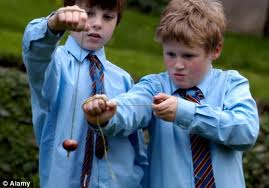
The autumn is the beginning of the season for the game when all over the country children start collecting conkers. Choose a big, round conker and then bore a hole through the middle of it, usinng a skewer or compass. Thread a piece of string through the hole and tie a knot at one end, so that it doesn’t pull through. The string should be long enough to wrap twice around your clenched hand and still have about 10 inches (25 cm) left. A toss of the coin usually decides who starts first but in the school playground, where it is an addiction, who starts first is more often than not, a matter of whoever shouts something like ‘Obli, obli oh, my first go.’

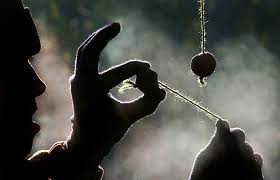
Each player has a conker on a knotted string. Players take turns at hitting their opponent’s conker. If you are the one whose conker is to be hit first, then you let it hang down from the string which is wrapped round your hand. A 10 inch (25 cm) drop is about right. You must hold it at the height your opponent chooses and you must hold it perfectly still. Your opponent, the striker, wraps their conker string round his hand just like yours. He then takes the conker in the other hand and draws it back for the strike. Releasing the conker he swings it down by the string held in the other hand and tries to hit her/his opponent’s conker with it. If he misses he is allowed up to two further goes. If the strings tangle, the first player to call “strings” or “snags” gets an extra shot. Players take alternate hits at their opponent’s conker. The game is won when one player destroys the other’s conker. If a player drops his conker or it is knocked from his hand, the other player can shout “stamps” and immediately stamps on the conker; but should its owner first shout “no stamps” then “stamps” is disallowed and the conker with luck remains intact.

images-4

In playground tournaments a winning conker can then go on to do battle with other conkers, each victory adding to the conker’s score. A conker which has won one battle is called a “one-er”, two battles a “two-er” and so on. So for example, you might overhear a child saying “I beat his fiver with my twoer”. In this case, and depending on which rules you play by, the winning twoer might simply become a three-er or it might become an eighter (two previous victories plus the victory over the fiver plus the five-score of the fiver). In this way winning conkers can quickly accumulate quite large scores!

The kudos of having a high-ranked winning conker is not limited to the playground and there have been many traditional ways of (illegally) hardening conkers before battling. Known hardening methods have included soaking or boiling the conkers in vinegar or salt water; soaking in paraffin; partially baking them for about a half hour in the oven to case-harden them; coating them with clear nail-varnish; filling them with glue or simply storing them in the dark for a year (since the shrivelled ones often seem to destroy the young shiny ones).

At the World Conker Championships in Ashton, Northamptonshire, Ashton Conker Club supplies the conkers ready drilled and laced to ensure fair play, thus preventing the use of such tricks to harden the nuts. Competition rules do not allow “stamps”, while “snags” do not give an extra swing – in fact causing “snags” is considered bad sportsmanship and can lead to disqualification.

Here are the World Conker Championships official rules:

  1. All Conkers and Laces are supplied by Ashton Conker Club. Laces must not be knotted further or tampered with. Each player is given a new conker and lace at the start of each game. Players may not re-use conkers from earlier games.
  2. The game will commence with a toss of a coin, the winner of the toss may elect to strike or receive.
  3. A distance of no less than 8″ or 20cm of lace must be between knuckle and nut.
  4. Each player then takes three alternate strikes at the opponent’s conker.
  5. Each attempted strike must be clearly aimed at the nut, no deliberate mis-hits.
  6. The game will be decided once one of the conkers is smashed.
  7. A small piece of nut or skin remaining shall be judged out, it must be enough to mount an attack.
  8. If both nuts smash at the same time then the match shall be replayed.
  9. Any nut being knocked from the lace but not smashing may be re-threaded and the game continued.
  10. A player causing a knotting of the laces (a snag) will be noted, three snags will lead to disqualification.
  11. If a game lasts for more than five minutes then play will halt and the “5 minute rule” will come into effect. Each player will be allowed up to nine further strikes at their opponents nut, again alternating three strikes each. If neither conker has been smashed at the end of the nine strikes then the player who strikes the nut the most times during this period will be judged the winner.

The first World Conker Championship was held at Ashton in Northamptonshire, England in 1965,on the second Sunday in October. That tradition survives, so this year’s World Conker Championships will be held at Southwick near Oundle, Northamptonshire on 13th October 2013.

In North America, the game currently has no official status, but the North American Conker Championship was inaugurated in 2012 in the town of Annapolis Royal, Nova Scotia. It is sometimes simply known as “chestnuts”. The game was played during the late 1940s and early 1950s in New York in the Flatbush section of Brooklyn, the Catholic areas of North Cambridge, MA in the late 1950s, and in the 1950s and early 1960s in the Amalgamated section of the Bronx, in Queens, the upper West Side of Manhattan, the Mohawk Valley area of upstate New York and in Westmount, Quebec and other English-speaking parts of Montreal into the 1970s, and on Rhode Island in the 1980s. A winning chestnut was referred to as a “killer”.

images-2

Mont Blanc

12 Wednesday Jun 2013

Posted by Caro Field in non-fiction

≈ 2 Comments

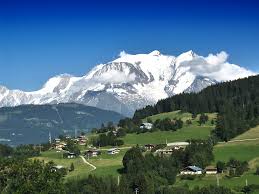
images-5Mont Blanc (French) or Monte Bianco (Italian), both meaning “White Mountain”, is the highest mountain in the Alps and Europe. It towers 15,781 ft (4,810 m) above sea level and is also sometimes known as La Dame blanche (French for “the White Lady”) or Il Bianco (Italian for “the White One”).

The mountain is part of a mountain range called the Graian Alps, which lies between the Aosta Valley in Italy and the Haute-Savoie of France. The summit lies on a line between the valleys of Ferret and Veny in Italy and the valleys of Montjoie and Arves in France. The three towns and their communes which surround Mont Blanc are Courmayeur in Aosta Valley, Italy, and St Gervais les Bains and Chamonix in Haute-Savoie, France — the latter being the site of the first Winter Olympics. A cable car crosses the mountain range from Courmayeur to Chamonix, through the Col du Geant. The Mont Blanc Tunnel, which was begun in 1957 and completed in 1965, is 7.25 miles (11.6 km) long and runs beneath the mountain between these two countries as one of the major trans-Alpine transport routes.

The first recorded ascent of Mont Blanc was on 8 August 1786 by Jacques Balmat and a doctor, Michel Paccard. This climb was precipitated by Horace Benedict de Saussure, who offered a reward for a successful ascent, effectively marking the start of modern mountaineering. The first woman to reach the summit was Marie Paradis in 1808.

Currently, the summit is ascended by about 20,000 mountaineering tourists each year and could be considered a relatively easy, yet long, ascent for someone who is well trained and is used to the altitude. This belief is reinforced by the fact that from l’Aiguille du Midi (which is where the cable car stops), Mont Blanc seems deceptively close, being merely 3,300 ft (1,000 m) higher. While seeming even closer, La Voie des 3 Monts route (which is more technical and challenging) requires a great deal of climbing and descent before the final section of the climb is reached. However, every year the Mont Blanc massif claims its fair share of victims, and at peak weekends, which is often in August, the local rescue service flies an average of 12 missions, to save people in trouble on one of the normal mountain routes.

There has been some debate and controversy about just who owns the summit since the French Revolution! Prior to the revolution the entire mountain was part of the Duchy of Savoy and then from 1723, part of the Kingdom of Sardinia. However, after Napoleon defeated Italy, Piedmont was forced to cede both Savoy and Nice to France under the Treaty of Paris. But after the Napoleonic Wars and French occupation, the King of Sardinia was restored to his traditional territories of Savoy, Piedmont and Nice under the Congress of Vienna, rendering the Treaty of Paris invalid. 45 years on and a new act was signed in Turin on 24 March 1860 and again on 7 March 1861 by Napoleon III and Victor Emmanuel II, with the consent of the King of Sardinia, which locates Mont Blanc on the French border. This act is still technically valid.

The Mont Blanc massif is currently being suggested as a World Heritage Site because of its unique cultural importance and the fact that it is one of the most visited tourist attractions in the world. It would require the governments of Italy, France and Switzerland to all make a request to UNESCO for it to be listed as one. A piece of splendid trivia for you: in 2007, Europe’s highest toilets, two of them, were helicoptered to the top of Mont Blanc at a height of 13,976 ft (4,260 m). The facilities will service 30,000 skiers and hikers a year, and these toilets currently (and for the foreseeable future) have to be emptied by helicopter – a somewhat challenging yet magnificent way to keep the mountain clean – Mont Blanc, not Mont Noir!

Mt_Blanc_full_Panorama

Always Here If You Need Me Award

09 Sunday Jun 2013

Posted by Caro Field in non-fiction

≈ 6 Comments

always-here-if-you-need-meI was very touched to be nominated for this award by the very talented poet, Helen Valentina of http://helenvalentina.com/ because it was founded by the equally talented writer, Briana, at http://whenibecameanauthor.wordpress.com for bloggers out there who are especially caring and loyal to their friends. An honour indeed. I was cited by Helen as “one of the most generous bloggers I have ever encountered, a true inspiration as a person” – a very humbling citation, for which I thank her from the top and bottom of my heart!

Rules:
Post a picture of the award somewhere on your blog.
List five things that make you happy.
Choose 5 people to nominate who have been a virtual shoulder to cry on, checked in on you when they knew things were rough, or have always been there for you.
Comment on their blogs to thank them and let them know you nominated them.

Things that make me happy:

1. My beautiful daughter, Isla Ness, who is lovely inside and out and of whom I am immensely proud.

2. My equally beautiful partner, Anita-Clare Field, who is the most extraordinary soul, and who makes me happier than she will ever know.

3. The work we do together and our plans for the future on our food website: http://www.loverofcreatingflavours.co.uk – a website Anita set up just 9 months ago on her mobile phone, using one thumb, when she could not sleep for the agony of an external fixator weighing 3k being attached to her arm to mend her catastrophically broken arm by literally pulling the bone back together..I urge you to check it out and follow, like the other 1.9-9.5+k hits on the blog or the 5k+ unique visitors we get to the site each and every day…

4. Our families and friends who are all immensely supportive.

5. The voluntary work I do, particularly in hospitals. You get as much back personally out of doing voluntry work as you put in…strange but definitely true…

My nominees:

I would love to be able to nominate all my blog followers for sticking so loyally by me! You are all heroes for that alone in my book… Everyone I follow in return are deserving of an award like this, but I shall stick to the rules!

1. It may be a cheat but my first nominee is Anita-Clare Field of http://www.loverofcreatingflavours.co.uk for a truly inspirational and informative cookery blog…not just a depository for recipes..it is so much more than that….and she is the truest, most loyal friend one could hope to have.

2. My dear friend Nicola Rigg, she is creative director of an equine site which is wonderful if you are a horse fan! She is at http://www.troton.com/ and has been an amazing friend in good times and bad.

3. Raymond Ferrer of http://urbanwallart.wordpress.com/, an inspirational artist who paints raw emotion on a page and is quick to support others in their creative endeavours.

4. The wonderful, resourceful, Amy Young Miller of http://vomitingchicken.com/, who reminds us of the importance of friends and family.

5. Alessa Bertoluzzi of http://www.carolinaheartstrings.com/, for a very interesting, eclectic blog that amuses and expands the mind, and for being very generous to her fellow bloggers….i

The Moon

07 Friday Jun 2013

Posted by Caro Field in non-fiction

≈ 6 Comments

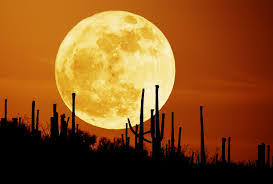
images-1After writing my non-fiction piece about our sun, I decided to do the same for our moon.

The Moon is the Earth’s only natural satellite and the 5th largest satellite in the solar system. The Moon rotates in complete synchronicity with the Earth and is the brightest object in the sky after the Sun, although its surface is actually very dark, somewhat like coal. Its prominence in the sky and its regular cycle have, since ancient times, made the Moon an important cultural influence on mythology, calendars, culture and the Arts in general. The Moon’s gravitational influence produces the tidal movement of the world’s oceans and the minutes of the day. The Moon’s current orbital distance, about thirty times the diameter of the Earth, causes it to appear almost the same size in the sky as the Sun, allowing it to cover the Sun almost completely during a total eclipse. This matching of apparent visual size is a coincidence. The Moon’s linear distance from the Earth is currently increasing at a rate of 3.82 plus or minus 0.07cm per year, but this rate isn’t ever constant.

The Moon is thought to have formed nearly 4.5 billion years ago, not long after the Earth. The current hypothesis for its origin is that the Moon formed from the debris left over after a giant, cataclysmic impact between Earth and some body the size of Mars known as Theia. It is thought that the pieces of the Earth that were thrown into space as a result, fused to form the Moon.

In 2001, a team at the Carnegie Institute of Washington confirmed that the most precise measurement of the isotopic signatures of lunar rocks showed that the rocks collected on the Apollo programme carried an isotopic signature that was identical with rocks from Earth, and were different from almost all other bodies in the Solar System. Since most of the material that went into orbit to form the Moon was originally thought to have come from Theia, this observation was unexpected to say the least. In 2007, researchers from the California Institute of Technology announced that there was less than a 1% chance that Theia and Earth had identical isotopic signatures. Published in 2012, an analysis of titanium isotopes in Apollo lunar samples showed that the Moon has the same composition as the Earth, which is in diametric conflict with the notion that the Moon formed far from Earth’s orbit or from Theia and supports the hypothesis that it was formed from early bits of the Earth fusing together.

The Moon is the only celestial body other than the Earth on which man has set foot. The USSR’s Luna programme was the first to reach the Moon with unmanned spacecraft in 1959; the United States’ NASA Apollo programme has achieved the only manned missions to date, beginning with the first manned lunar orbiting mission by Apollo 8 in 1968, and six manned lunar landings between 1969 and 1972, with the first being Apollo 11. These missions have returned over 380 kg of lunar rock, which has been used to develop a geological understanding of the Moon’s origins, the formation of its internal structure, and its provenance..

After the Apollo 17 mission in 1972, the Moon has been visited only by unmanned spacecraft. Future manned missions to the Moon have been planned, including government as well as privately funded efforts. The Moon remains, under the Outer Space Theory, free to all nations to explore for peaceful purposes.

The dark and relatively featureless lunar plains which can clearly be seen with the naked eye are called maria (Latin for “seas”; the singular word being mare), since they were believed by ancient astronomers to be filled with water. They are now known to be vast solidified pools of ancient lava – basaltic lava. While similar to terrestrial basalts, the mare basalts have a far higher percentage of iron and are completely lacking in minerals altered by water. Maria are found almost exclusively on the near side of the Moon, covering 31% of the surface on the near side, compared with a few scattered patches on the far side. This is thought to be due to a concentration of elements that produce heat under the crust on the near side, which would have caused the underlying mantle to heat up, partially melt, rise to the surface and erupt. So most of the Moon’s mare erupted during the Imbrian period, 3 – 3.5 billion years ago, although some radiometrically dated samples are as old as 4.2 billion years and the youngest eruptions appear to have been only 1.2 billion years ago.

The lighter-coloured regions of the Moon are called terrae, or more commonly highlands, since they are higher than most maria. They have been radiometrically dated as forming 4.4 billion years ago. In contrast to the Earth, no major lunar mountains are believed to have formed as a result of tectonic events. The concentration of mare on the Near Side is probably due to the fact that the substantially thicker crust of the highlands of the Far Side may have formed in a slow-velocity impact of a second terran moon a few tens of millions of years after the formations of the moons themselves. The Moon’s surface is also studded with craters formed when asteroids and comets collide with the lunar surface. There are estimated to be roughly 300,000 craters wider than 1 km on the Moon’s near side alone.Some of these are called after scholars, scientists, artists and explorers.

Finally, liquid water cannot exist on the lunar surface. When exposed to solar radiation, water quickly decomposes and is lost to space. However since the 1960s, scientists have hypothesized that water ice may be deposited by impacting comets or possibly produced by the reaction of oxygen-rich lunar rocks, and hydrogen from solar wind, leaving traces of water which could possibly survive in cold, permanently shadowed craters at either pole on the Moon. Computer simulations suggest that up to 14,000 km2 of the surface may be in permanent shadow. In years since, signatures of water have been found to exist on the lunar surface. The presence of usable quantities of water on the Moon is an important factor in assessing whether it would be possible to live on it, since the cost of transporting water from Earth would be prohibitively expensive. But the question is, would anyone really want to, given the fact that on the Moon we could not enjoy the extraordinary beauty that our Earth possesses and its wonderfully diverse vegetation and animal life?

images-3

Naked Mole Rat

05 Wednesday Jun 2013

Posted by Caro Field in non-fiction

≈ 8 Comments

imagesHeterocephalus glaber, the naked mole rat, is a fleshy, furless, buck-toothed East African creature that is so ugly, it almost has a certain kind of charm! Judge for yourself. These mammals are neither moles nor rats, and socially they behave more like bees, wasps, ants, and termites than to other vertebrates.

They live in underground colonies of up to 300 individuals with a dominant breeding ‘queen’ and celibate soldiers and workers. Until the late 1970s scientists believed that this trait was confined to insects. About the size of a large mouse or a small hamster, they are nearly blind and almost completely hairless. They have very prominent incisors that stick beyond their lips, which they use to dig with. Their wrinkled bodies are extremely well formed for moving through narrow passages, and they can move backwards just as easily as forwards.

Naked mole rats are apparently impervious to pain, survive in very low oxygen levels and are resistant to cancer. Despite exhaustive research, scientists have never seen malignant tumours in mole rats. Studies indicate that mole rats cells may exhibit a form of ‘early contact inhibition’, in which replicating cells recognise their neighbours and cease dividing almost immediately. This acts as a fail-safe to stop potentially cancerous cells from multiplying beyond a critical density. Researchers are uncertain why evolution prompted this improvement, but they are keen to find a way to capitalize on it for humanity.

The social structure of a naked mole rat colony mirrors that of a beehive or ant nest, with a single breeding female at its head. Ninety eight percent of the members of a colony will be infertile, with between one and three males providing sperm for the queen.The queen firmly establishes the social hierarchy by bullying; displays of head-shoving and clambering over her subordinates. Junior mole rats respond with a physiological stress reaction that effectively suppresses sperm production or ovulation. Freed of the demands of reproduction, celibate workers can devote their energies to tending to the queen’s young or collecting underground plant roots to feed the rest of the colony. Meanwhile, higher status rodents form a “soldier caste” that defends the burrow from predatory snakes or other mole rats.

When an old queen dies, the female soldiers engage in battle. After much head-butting and clambering, a single victor becomes the new queen and the most powerful males become her royal consorts. Then the young queen grows noticeably larger and longer than her workers, as the vertebrae in her spine spread to accommodate an almost continuous state of pregnancy. Relieved of suckling duties by her celibate minions, she can concentrate on breeding rather than nursing. Almost uniquely among mammals, naked mole rat queens can therefore have litter sizes larger than the number of nipples available for suckling.

The air inside a mole rat burrow has incredibly high levels of carbon dioxide and low levels of oxygen. The high carbon dioxide concentration increases acid in the rodents’ tissue fluid to levels that would leave most mammals writhing in agony. Researchers discovered that a mutation in a single gene has switched off this response in mole rats, allowing them to adapt to what would otherwise be an extremely uncomfortable environment-, and incidentally, giving them an extraordinary tolerance to pain. This capability has piqued the interest of medical scientists looking to develop new human painkillers.

Naked mole rats’ tolerance of low oxygen levels may hold the key to improving human health. In most mammals, brain tissue is very sensitive to low oxygen levels, yet a mole rat neuron can survive in conditions of oxygen deprivation, or hypoxia, six times as long as a corresponding mouse neuron. It is thought that naked mole rat brain cells retain features of immature but hypoxia-tolerant foetal neurons. Stroke researchers are keen to harness these insights for the treatment of human hypoxic brain injury.

Naked mole rats can live up to 30 years, which is an astonishingly long lifespan for a small rodent. Scientists do not fully understand the reasons behind this, although they have a low metabolic rate, which may also contribute to their hypoxia tolerance , and this helps. Task-specialization also seems to promote long life, old age being particularly common among creatures that care for their young communally. These include mole rats, social insects, bats, and humans, all of which live much longer than would be expected on the basis of their body mass alone. Furthermore, over-frequent death becomes inconvenient, wasteful, and unsanitary in an over-crowded burrow. Colony hygiene is paramount when mortality finally asserts itself, and, unusually among non-human mammals, naked mole rats will always bury their dead. The mole rat in a nutshell. An extraordinarily ugly little rodent, that may give us enormous medical advances by its mere existence. Nature at its coolest.

The Sun

03 Monday Jun 2013

Posted by Caro Field in non-fiction

≈ 14 Comments

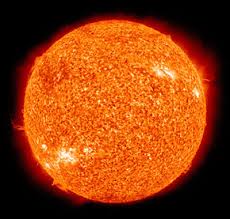
images-1The Sun is the largest star in our solar system, accounting for 99.86% of the total mass of the solar system. To give you an idea of its size, it has a diameter about 109 times the size of the Earth at about 865,600 miles (1,392,684 km) wide and a mass about 330,000 times greater. Chemically, about three quarters of its mass is hydrogen, the rest mainly helium. The remainder (just under 2% of it), is made up of heavier elements like oxygen, carbon, neon and iron. This 1.69% still represents a mass 5,628 times that of the Earth.

The core of the Sun rotates as a single body but the outer layers of the Sun rotate at different speeds; so while the surface at the equator rotates once every 25.4 days, the surface at the poles only rotates every 36 days. This strange behaviour is due to the fact that, unlike the Earth, the Sun isn’t a solid body. At the Sun’s core, the temperature is a staggering 15.6 million Kelvin (K). It’s power is produced because each second about 700,000,000 tons of hydrogen is converted, via nuclear fusion, into approximately 65,000,000 tons of helium and 5,000,000 tons of energy in the form of gamma rays. As it approaches the Sun’s surface, the energy is repeatedly absorbed and then re-emitted at ever lower temperatures so that when it reaches the surface, known as the photosphere, it is primarily visible light at a heat of 5800 K. Above the photosphere is a small area known as the chromosphere, and above that is the corona, which is highly rarefied, the temperature being 1,000,000 K, but which extends millions of kilometers out into space, although it is only seen during a total eclipse.

eclipse77bFrom the Earth, our Sun and Moon appear the same size, though of course, they are not. Since the Moon’s orbit roughly echoes the Earth’s orbit, there are times when the Moon moves directly between the Earth and the Sun. When this happens, the entire solar disk being blocked, we get total eclipse. If the alignment is less than perfect, we get partial eclipse. Partial eclipses are visible over a wide area of the Earth, but the region from which a total eclipse is visible, known as the path of totality, is extremely narrow, only a few kilometers wide. You are likely to see a partial eclipse from anywhere in the world maybe a couple of times in a decade. However, the chances of seeing a total eclipse are minimal, unless you are prepared to travel halfway around the world to be in the path of totality. But it is worth it. To stand in the shadow of the moon is an awe-inspiring experience. For a mere few minutes, it is dark in the middle of the day, the stars come out, birds and animals fall silent, thinking it’s time to sleep, and the solar corona becomes visible. Magnificent!

The Sun’s magnetic field is immensely powerful, extending out into the Solar System, way beyond Pluto. As well as heat and light, the Sun emits a low density stream of charged particles known as the solar wind. These electrons and protons move through the solar system at a speed of 279.6 miles/450 km per second and can have an effect on Earth ranging from power line surges to radio interference, from the trajectories of space craft to the Northern Lights or Aurora Borealis.

Recent research from the space craft Ulysses indicates that when the solar cycle is at its lowest, the solar wind in the polar regions moves almost twice as fast at 466 miles/750 km per second.

The Sun is about 4.5 billion years old and, since its inception, has used up about half of the hydrogen at its core. It will continue to radiate for another 5 billion years, during which time its luminosity will probably double. However, it will eventually run out of hydrogen to fuel it and when it does, it will result in the total annihilation of the Earth, if our own stupidity at rubbishing our planet has not already caused this.

Ironman/Ironwoman

02 Sunday Jun 2013

Posted by Caro Field in non-fiction

≈ 4 Comments

In honour of our good friend, Cory Cook, who is an Ironwoman, having just completed the qualifier in Lanzarote! And to coincide with the qualifier in Raleigh,  North Carolina  today .

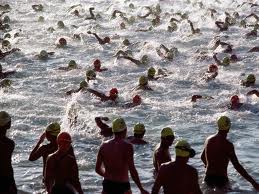
images-1An Ironman Triathlon is one of a series of long-distance triathlons organized by the  WTC (World Triathlon Corporation), which consists of a 2.4m mile (3.86 km) swim, a 112-mile (180.25 km) bicycle ride and a 26.2-mile (42.2 km) marathon run, raced in that order and without a break. Most Ironman events have a strict time limit of 17 hours to complete the race. If the Ironman race starts at 7:00 AM, the mandatory swim cut off for the 2.4-mile (3.9 km) swim is 2 hours 20 minutes, the bike cut off time is 5:30 PM, and all competitors need to complete their marathon by midnight.

The idea for the original Ironman Triathlon arose during the awards ceremony for the 1977 O’ahu Perimeter Relay (a running race for teams of 5). Among the participants were people who had long been debating which athletes were more fit, runners or swimmers. One competitor, US Naval Commander John Collins suggested that the debate should be settled through a race combining the three existing long-distance competitions already on the island: the Waikiki Roughwater Swim (2.4 miles/3.86 km), the Around-Oahu Bike Race (115 miles/185.07 km; originally a two-day event) and the Honolulu Marathon (26.219 miles/42.195 km).

Until that point, no one present had ever done the bike race. Collins calculated that by shaving 3 miles (4.8 km) off the course and riding counter-clockwise around the island, the bike leg could start at the finish of the Waikiki Rough Water and end at the Aloha Tower, the traditional start of the Honolulu Marathon. Prior to racing, each athlete received three sheets of paper listing a few rules and a course description. Handwritten on the last page was this exhortation: “Swim 2.4 miles! Bike 112 miles! Run 26.2 miles! Brag for the rest of your life“, now a registered trademark.

Collins said, “Whoever finishes first, we’ll call him the Iron Man” and so the legend began. Of the fifteen men to start off in the early morning on February 18, 1978, twelve completed the race. Gordon Haller, a US Navy Communications Specialist, was the first to earn the title Ironman by completing the course with a time of 11 hours, 46 minutes, 58 seconds. With no further marketing efforts, the race gathered as many as 50 athletes in 1979. Only fifteen competitors started off the race Sunday morning. San Diego’s Tom Warren won in 11 hours, 15 minutes, 56 seconds. Lyn Lemaire, a championship cyclist from Boston, placed sixth overall and became the first “Ironwoman”.

In 1981 organizer Valerie Silk moved the competition to the less urbanized Hawaii  and in 1982 moved the race date from February to October; as a result of this change there were two Ironman Triathlon events in 1982. The Ironman format remains unchanged, and the Hawaiian Ironman is still regarded as an honored and prestigious triathlon event to win worldwide. There are 28 Ironman Triathlon races throughout the world that enable qualification for the 2013 Ironman World Championships. Professional athletes qualify for the championship through a point ranking system, where points are earned based on their final placement in Ironman events. The top 50 male and top 35 female professionals in points qualify for the championship. Amateur athletes qualify for the championship by receiving slots allocated to each age group’s top finishers in a qualifying event.

Ironman has thrown up many colourful characters and heroes.The runner-up in the first Ironman, John Dunbar, a US Navy Seal, led after the second transition and had a chance to win but ran out of water on the marathon course and so  his support crew had to give him beer instead! Craig Alexander (Crowie) holds the Hawaiian course record in a time of 8 hours, 3 minutes and 56 seconds, set in 2011. Mark Allen (The Grip) has won the Hawaiian Iron Man 6 times, 5 of them consecutively. Jon Blais (Blazeman) was the first person with amyotrophic lateral sclerosis  (ALS or “Lou Gehrig’s disease”), a terminal muscle-wasting illness, to enter and complete the Ironman Triathlon in Hawaii. He completed the October 15, 2005, race in 16 hours and 29 minutes. He died on May 27, 2007.

Around age 65, the extraordinary Dick Hoyt completed the Ironman Triathlon with disabled son Rick, who cannot walk or talk. Dick pulled Rick in a boat through the swim, rode with him on a specially outfitted bike through the 112 mile (180 km) ride, and pushed him in a wheelchair through the run. Lisa Bentley, an 11 time Ironman winner, has cystic fibrosis. Kelly Bruno holds the Hawaiian Ironman record for a female amputee and Sarah Reinertsen was the first woman to complete the Hawaiian Ironman on a prosthetic leg. But perhaps, most famous of all is Julie Moss, who collapsed from dehydration and exhaustion yards from the finish line when winning, and was passed by Kathleen McCartney, who won the title, yet nevertheless Moss half crawled, half dragged herself to the finish line. Her performance was broadcast worldwide and created the Ironman mantra that just finishing is a victory. So hats off to our good friend Cory Cook who runs these triathlons regularly….OOF!

images

Pigeon Post

28 Tuesday May 2013

Posted by Caro Field in non-fiction

≈ 12 Comments

cher-amiThe pigeon, a bird that is often much maligned, is a very unlikely hero. Why? Because they were used through both World Wars, as the most reliable form of communication, particularly during the First World War, before the advent of radio or telegraph. General John Pershing ordered the American Signal Corps to build a pigeon ‘battalion’ during WWI, when it is estimated that half a million birds were used on both sides. These birds had an astonishing 95% success rate at completing their missions.

Maria Dickin, founder of the PDSA (The People’s Dispensary for Sick Animals), the UK’s leading veterinary charity, founded the Dickin Medal in 1943, to honour animals who display outstanding bravery. It is considered the animal equivalent of the Victoria Cross and pigeons hold more of these awards than any other creature, they hold 32 of them. In fact pigeons also hold the Purple Heart, and the Distinguished Service Medal (USA) and the Croix de Guerre with palm (France).

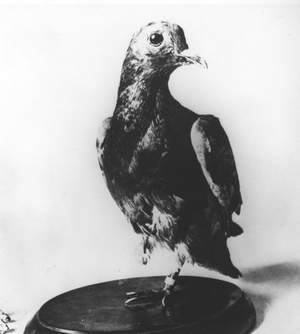
One of the most famous birds to be honoured in this way was a homing pigeon called Cher Ami (French for dear friend), who saved an 800 man ‘lost battalion’ that was coming under friendly fire because they had advanced too far behind enemy lines. The battalion’s only chance of survival lay with this bird, which, once released, was repeatedly shot at by German soldiers. Cher Ami was downed by a shot through the breast, yet struggled back into the air, and flew the 25 miles  (40.2 km) to its command post. By the time he got home, he had one eye shot out and was missing most of his leg. The message to the command post was retrieved because it still clung to the tendon that was the only thing holding his leg on…the message stopped the shelling and the battalion was saved. After healing, Cher Ami returned to America, where he died in 1919, was mounted and placed on display in the Smithsonian Institute. He was awarded both the Dickin Medal and the Croix de Guerre with Palm.

Another such bird was G.I. Joe, which flew 16.8 miles (30 km) in just 20 minutes and saved the lives of 1,000 soldiers by carrying a message to cancel a bombardment of Colvi Vecchia, which the British had entered ahead of schedule. For the feat, the bird was awarded the Dicken Medal, the only U.S. war pigeon to do so.

When WWII broke out homing pigeons were once again put to good use by both sides.In fact Heinrich Himmler was commander of the German national pigeon organisation and had 50,000 birds at his disposal. These birds were not just used to carry communiqués, they also had cameras mounted under them so they could photograph troops, equipment, factories in towns, etc. Both Germans and English developed falcon squadrons too, to intercept these winged spies.

These birds did not achieve these astonishing feats without their handlers. One of the most famous pigeoneers of all time was Col. Clifford Poutre of the US Army who was stationed at the pigeon lofts at Fort Monmouth, New Jersey. He is credited with doing away with the notion that you had to starve a homing pigeon to make it return home, instead he made their lives so pleasant that they wanted to return. He is also credited with several amazing feats unprecedented in pigeon-keeping history. He trained his pigeons so that they knew:

– how to return to a mobile pigeon loft even after it had been moved ten miles from where the pigeon departed;
– how to carry packages, parcels, and small cameras on their backs, chests and legs;
– how to fly at night and without stopping for up to twenty-four hours;
– how to carry a canary piggy-back from New Jersey to a loft on the New York City rooftops.

Pigeons were carried on every Lancaster Bomber in case a crew was shot down or had to ditch their plane, in order that they could be located and rescued. Many were saved by this. The army also developed a special cage and parachute for dropping pigeons from aircraft to supply isolated troops with a means of communication. The device was also used to drop thousands of pigeons over the countryside during the June 1944 Normandy Invasion. French civilians were asked to send back detailed information about German installations and troop movements. So next time you curse at a pigeon that gets underfoot, remember, they may have heroic forebears!

A Life Well-Lived

27 Monday May 2013

Posted by Caro Field in non-fiction

≈ 13 Comments

images-1May 27: A departure today from poetry to write a non-fiction piece about a remarkable man. The information about this extraordinary medic is based on an article in The Japan Times by Judit Kawaguchi.

A Japanese doctor called Dr. Shigeaki Hinohara, turned 101 on 4th October 2012. He has worked as a medic at St Luke’s International Hospital in Tokyo and taught at St Luke’s College of Nursing since 1941, and he still is! Since the age of 75, he has published some 15 books, one of which, ‘Living Long, Living Good” has sold in excess of 1.2 million copies and he has founded the New Elderly Movement, to encourage others to live life to the full by leading by example.

His philosophy? That we should follow the inspiration of Robert Browning’s poem Abt Vogler, a poem that Hinohara’s father used to read to him as a boy. In it, the poet exhorts us to create big art, not small. As Hinohara says, “It encourages us to draw a circle so large that we cannot finish it whilst we are alive. So huge that we cannot see the beginning or end of it, just an arch in space, but the rest is there, but beyond our vision, it is somewhere in the distance…”

A few other choice things Dr Hinohara is quoted as saying:

Energy comes from feeling good, not eating well or sleeping a lot. We all remember as children, when we were having fun, we often forgot to eat or sleep. I believe we can have that attitude as adults too..

Share what you know. I give 150 lectures a year, some for 100 elementary-school children, others for 45,000 business people. I usually speak for 60 to 90 minutes, standing, to stay strong.

To stay healthy, always take the stairs and carry your own stuff. I take two stairs at a time to get my muscles moving.

Pain is mysterious, and having fun is the best way to forget it. Hospitals must cater to the basic needs of their patients. At St Luke’s we have music and animal therapies and art classes.

Hospitals must be prepared for major disasters. We designed St. Luke’s so we can operate anywhere: in the basement, in the corridors, in the chapel. Most people thought I was crazy to prepare for a catastrophe, but on March 20, 1995, I was unfortunately proven right when members of the Aum Shinrikyu religious cult launched a terrorist attack in the Tokyo subway. We accepted 740 victims and in two hours figured out that it was sarin gas that had hit them. Sadly we lost one person that day, but we saved 739 lives.

Science alone cannot cure or help people. Science lumps us all together, but illness is individual. Each person is unique, and diseases are connected to their hearts. To know the illness and help people, we need liberal and visual arts, not just medical ones.

It is wonderful to live long. Until one is 60 years old, it is easy to work for one’s family and to achieve one’s goals. But in our later years, we should strive to contribute to society. Since the age of 65, I have worked as a volunteer. I still put in 18 hours seven days a week and love every minute of it.

Find a role model and aim to achieve even more than they could ever do. My father went to the United States in 1900 to study at Duke University in North Carolina. He was a pioneer and one of my heroes. Later I found a few more life guides, and when I am stuck, I ask myself how they would deal with the problem.

What better role model could any of us find than this extraordinary man? His is a life truly well lived.

← Older posts
Newer posts →

A Four Letter Word – Buy Here

My Facebook Page

My Facebook Page

Enter your email address to follow this blog and receive notifications of new posts by email.

Join 1,534 other subscribers

Gallery

This slideshow requires JavaScript.

Blog Stats

  • 97,123 hits

Tags

artwork barcelona beach bear bend boat books brazil bridge butterfly canal caravan cars cats celebrity chef child chimes china Crowcombe desert dogs drinks eca embellishment equestrian fame flowers France friendship green guitar handbags happiness home Italy Japan joy lavender London love map music nature O P poetry puddings rain rainbow river rivers rosd salmon sand sea ships shoes shopping sky sleigh snow somerset spain stardom statue sunrise sunset The Road to Crowcombe trees walk walking weather winter world

Blog at WordPress.com.

  • Subscribe Subscribed
    • Caro Field Author
    • Join 409 other subscribers
    • Already have a WordPress.com account? Log in now.
    • Caro Field Author
    • Subscribe Subscribed
    • Sign up
    • Log in
    • Report this content
    • View site in Reader
    • Manage subscriptions
    • Collapse this bar
 

Loading Comments...