
 Our skies have recently become somewhat sexier with the arrival of Brian Cox on our TV screens in the UK. Formerly the keyboard player in a rock band, he is now a particle physicist and Royal Society University Research Fellow and Professor at the University of Manchester.
Jupiter. The largest planet in our solar system and named after the Roman king of the Gods by ancient astronomers. It is the fifth closest planet to the sun and is made up of 84% hydrogen, 15% helium and small amounts of ammonia, acetylene, ethane, methane, phosphine and water vapour.
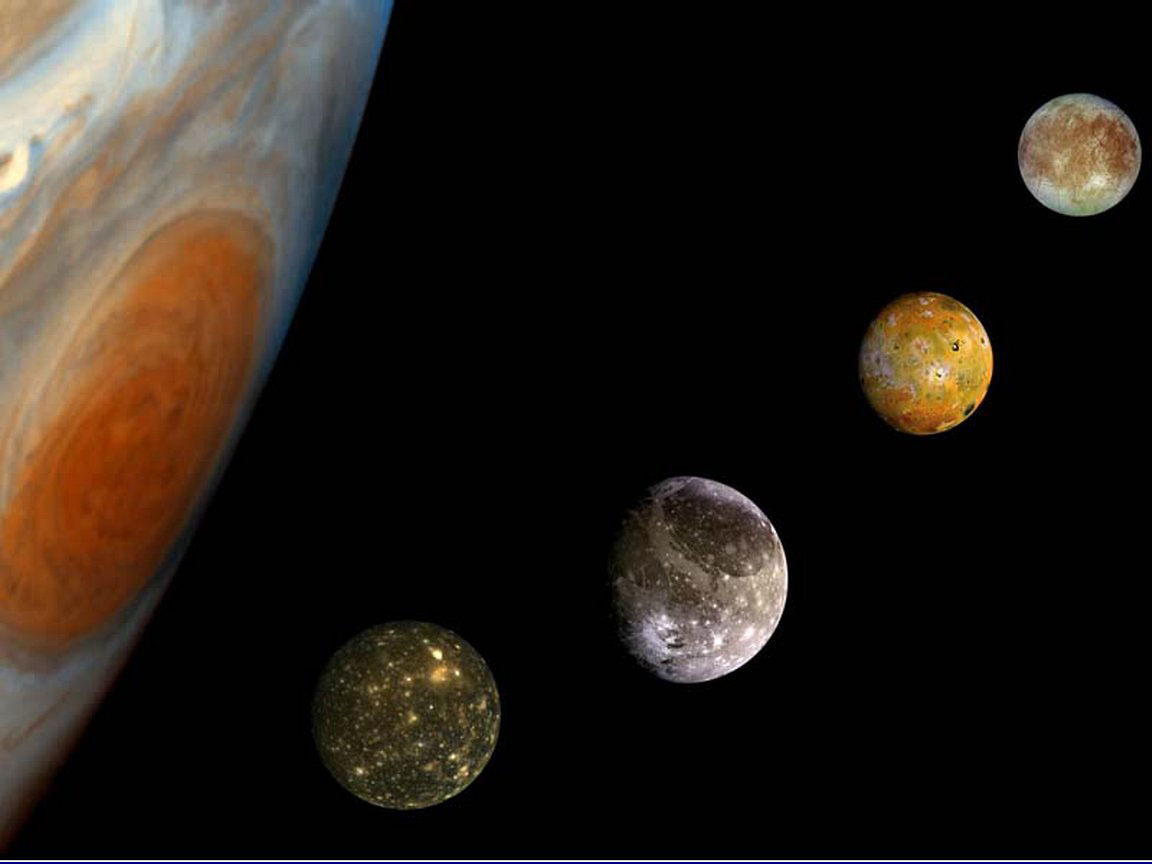
A few facts about Jupiter. It is such a giant of a planet, that 1,300 Earths could exist within its volume. It rotates so incredibly quickly that days only last 10 hours and yet it takes 12 of our Earth years to orbit the sun. The planet has the largest moon in the Solar system, bigger than Mercury. It has over 60 known satellites, or moons, and they have wonderful names: Gannymede, Europa, Callisto and Io are four of them. The four major moons were discovered by Galileo Galilei in 1610 and were named for the lovers of Zeus.
Jupiter has a red spot, which is essentially a persistent anti-cyclonic giant storm that has been raging possibly since 1665, certainly since it was first spotted via telescope about 300 years ago. This Great Red Spot has roughly the circumference of the earth, which gives a stark realisation of the sheer size of this planet. Even before Voyager proved it was a storm, it was known that it bore no relation to the mass below it because it rotated at a different speed to the mass beneath it, sometimes faster, sometimes slower. During its recorded history, relative to any fixed marker on the planet below, the red spot has travelled round Jupiter several times.
The orange brown colour of Jupiter is due to the upwelling of compounds that change colour when they come into contact with ultraviolet light. No one knows their exact composition, but they are believed to be sulphur, phosphorous and maybe hydrocarbons. Theory posits that if Jupiter’s mass increased considerably, then it would shrink in size because the interior would be so severely compressed by the increased gravitational force generated. Fascinating, huh?
My last interesting snippets of information are that the planet’s mass is 70% of the total mass of all the other planets in the solar system and that if you weigh 100 pounds on Earth, you will weigh 264 on Jupiter. Lucky we live on this planet, yes?!
 Caro Field Author
What a great post. I really didn’t think it would be very interesting, but I found my self captivated and wanting to read more! Enlightening, informative and educational. Thanks!
Fascinating! Thanks for sharing and love the music .. what a great touch!
Rosemary X
Thanks so much! I confess to not actually being in any way passionate about astronomy, but once I had thought about writing about Jupiter, I was entranced by what I learned!
Thanks Rosemary! I really enjoyed writing it, so am delighted that my efforts have been appreciated!
Gorgeous photo! Jupiter really is one superlative after another.
It’s a stunning photo, huh? Big up to Voyager for taking it!
Wonderful blog and that first picture – wow!!
I loved this post.
Dropping in from the UBC
Hello there fellow bloogger Bev! I am glad you enjoyed reading the post. And yes, what a fantastic picture!
Thanks for reading and liking the post, Sophie and Paris!
I knew Jupiter was big, but didn’t know just how big! The universe is an amazing place, and that photo is captivating – really fires the imagination 🙂
It is astonishing, huh? And just how beautiful is that picture?
Caro,
We are great sky-watchers at our house, and I’ll re-read this post to my littles this morning in Science class. It is astonishing, and I am very happy that I don’t weight 264 pounds. Very nice post!
That’s brilliant! I am glad that I dont weigh that much either! It was great fun to write the blog! And thanks for sharing it round….
Fascinating and an engaging read. 🙂
Thank you Lori!
Great to have a bit more info on the giant. And the pic! Thank you. Cathy x
Glad you enjoyed it! 😋