
I love the Spring. It means so many things to me, not least a new beginning…
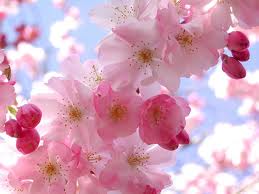
Spring is my favourite season of the year. Why? Because it is the season of new beginnings, of rebirth, renewal, rejuvenation, regrowth. At the Spring equinox, the days are almost 12 hours long, with day length increasing as the season unfolds.
In most of the temperate zones in the North, the months of Spring are usually regarded as March, April and May. In the South, they are September, October and November. In Sweden, meteorologists define Spring as beginning on the first occasion that the temperature rises above 0º Celsius for 7 consecutive days. This means that in different parts of Sweden, Spring might start on a different day, depending on the elevation and latitude of the place concerned! In the USA, the March equinox is often regarded as the first day of Spring, and the Northern solstice as the first day of summer, or more fancifully, by Groundhog Day. In South America, the year was broken up according to solstices and equinoxes. The Ara Pyau, or New Age, ran through Spring and Summer and the Ara Ymã, or Old Age, marking Autumn and Winter. According to the Celtic calendar, Spring starts at the beginning of February near Imbolc/Candlemas and ends in early May with Beltane.
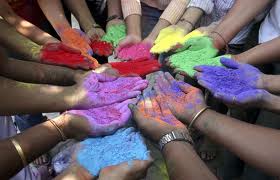
In Spring, the Earth’s axis tilts toward the Sun, and the days get longer and warmer. But this season can also bring with it unstable weather in the form of flooding from snowmelt, thunderstorms or tornadoes. Akitu was a Spring Festival in ancient Mesopotamia. In Australia, the Melbourne Cup, is held on a public holiday in Victoria in the Spring and it is known as ‘the race that stops the nation’. Nowruz, or New Day is celebrated by Persian people worldwide as the first day of Spring and in India Holi, or the festival of colours, is celebrated by the Hindus to mark the end of winter. it is, of course, one of Antonio Vivaldi’s Four Seasons.
Consider also, other meanings for the word ‘spring’. It can mean to jump or leap, it can refer to a source of water, it can represent a tightly coiled piece of metal. All of these items suggest a sudden, vigorous activity. The word spring comes from the German word, spreng, meaning to jump, and about 1000 years ago this mutated to spryng in Old English. Prior to the season being named for the fact that winter was bounding forward into summer, it was known in Old English as langiton because the days were lengthening. This word survives in modern English as lenten or Lent.
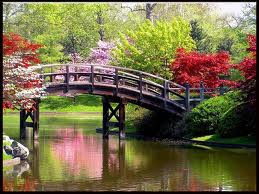
So clearly my forebears too welcomed the arrival of Spring as a time of new beginnings, of cold ending and nature reasserting itself. I see it as a blueprint for new discoveries, a time for change or reacquaintance, above all, a time of hope… do you?
 Caro Field Author
What a wonderful summation of spring – I love all the facts from around the globe! Your phrasing is so lyrical and you paint pictures with your words. And I agree – the spring means “new” to me too.
Thanks for reading and enjoying! Huzzah forSpring!
Oh, I love the spring, too! I see it as a refreshing beginning after a cold winter. Nature starts blooming and turning green everywhere, and the air is crisp and fresh.
It is indeed! Blooming marvellous (literally!)
Spring comes early here in Central California and that always means an early start for backyard crop planting. Hubby and I are already getting the garden patch ready!
Spring is my favorite time of year too. In fact, I’m ready for it now – no fair getting the jump on us in the Northeast :-). There’s something about sunshine, warmer, longer days and new growth that’s invigorating, inspiring and motivating.
Isn’t it wonderful? It’s such a HOPEFUL time of the year…
I enjoyed reading your post especially interested in the India Holi, or the festival of colours. I wonder if the beautiful colours of Spring inspired the name. Here in North Carolina in the US, spring comes early. We can usually plant our cold weather crops a the end of Feb. or early March. – Maggie
Glad you enjoyed the post Maggie! Spring is such a wonderful time of the year to look forward to…
Thanks for reading! Lucky you, having an early Spring!
I live in the Northern United States and while spring begins on the spring equinox according to our calendar, we sometimes have snow on the ground (not in recent years, though) into April. We don’t have our last frost date until sometime in May. I am already so sick of winter – your spring post energized me and taught me a lot. I am going to post this on my Facebook fanpage. Thank you!
Bbbrrrr! Don’t envy you! Thanks for posting it on your FB page! I’m honoured!
Thanks to SlimySnail and Debbie Young for liking Spring
Thank you foe making me feel as if Spring has nearly arrived! Living in England, I’ll be beset by winter’s prolonged darkness for some weeks yet. I take the spring solstice to be the first day of Spring – but I always rejoice on the first day of March, whatever the weather, as at least it means that February, the bleakest month is over. It’s also my husband’s birthday. My parents were married on the spring solstice – such a lovely romantic day begin a new life! They celebrate 60 years of romance this Spring!
Wish your parents the very best from me!
Thanks, Caro!
I agree. I love spring! What a great time for new growth (in all ways!)
Me too Karen! Bestest time of year!